Get Full Government Meeting Transcripts, Videos, & Alerts Forever!
Get email alerts on the Efc Housing Pilot topic
No spam. Unsubscribe anytime.
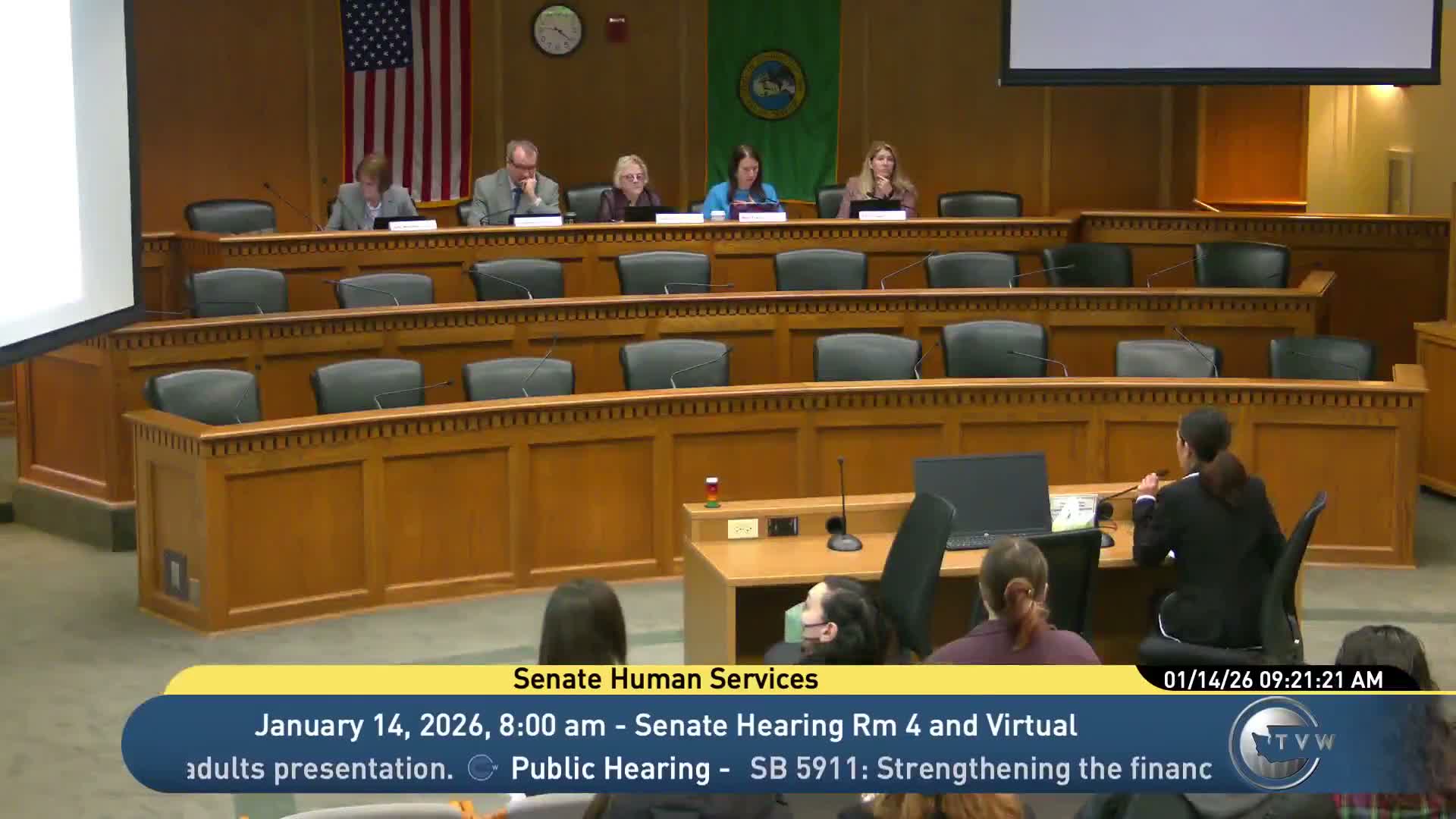
Senate committee hears proposal for 2‑year pilot to provide housing assistance to youth in extended foster care
Summary
SB 5940 would create a two-year extended foster care housing pilot to provide rental assistance and related fees for up to 50 eligible youth, with rental assistance capped at 24 months and a legislative report due June 30, 2029; advocates and several young people testified in strong support.
Senate Bill 5940, sponsored in the Senate by Chair Claire Wilson, would establish a two-year pilot within DCYF to provide rental assistance and associated housing fees for eligible youth enrolled in extended foster care who are experiencing or at risk of homelessness.
Under the bill’s terms described to the committee, up to 50 young people could participate; rental assistance cannot exceed 24 months nor continue beyond a youth’s 20th birthday. Assistance is to be based on fair-market rent in the youth’s location and youth would pay no more than 30% of adjusted gross income toward rent (including foster care subsidy), with an upper contribution cap of 40% if rent and utilities exceed local fair market rent. DCYF must run a competitive procurement to contract entities to operate the program, or DCYF may operate parts of the program directly. DCYF must report to the Legislature by June 30, 2029 with program outcomes, costs and participant demographics.
Chair Claire Wilson framed the pilot as a fiscally prudent, targeted effort that allows participants to receive housing supports while remaining in EFC, filling a gap created by the inability to receive federal housing vouchers while in care. “We spend a lot of time talking about juvenile rehabilitation and juvenile justice,” Wilson said; “we can either invest in young people now, or invest in locking young people up.”
A range of advocates and young people provided testimony in support. Jonas Rios, who described receiving a FYI (Foster Youth to Independence) voucher after moving from California, credited the voucher with enabling him to earn a driver’s license, obtain medical care and attend college. Courtney Hageman and other witnesses described how stable housing while in EFC allows youth to address trauma, pursue education and avoid repeated homelessness.
Staff noted a fiscal note had been requested but not yet received at the time of the hearing. Committee members asked questions about eligibility overlaps (for example, whether receipt of federal benefits would count as income for housing eligibility), and staff said additional technical clarifications would be needed during bill development.
The hearing record contained multiple supportive testimonies from youth with lived experience and service providers; Chair Wilson closed the hearing after public testimony.