Get Full Government Meeting Transcripts, Videos, & Alerts Forever!
Get email alerts on the Foster Care Benefits topic
No spam. Unsubscribe anytime.
Senate bill would stop DCYF from using young adults’ Social Security benefits to reimburse care
Summary
Senate Human Services Committee heard testimony supporting SB 5911, a bill to prohibit the Department of Children, Youth, and Families from applying Social Security benefits of young adults in extended foster care toward the cost of their care; sponsors said it preserves benefits for 18–21-year-olds and addresses abrupt resource cutoffs.
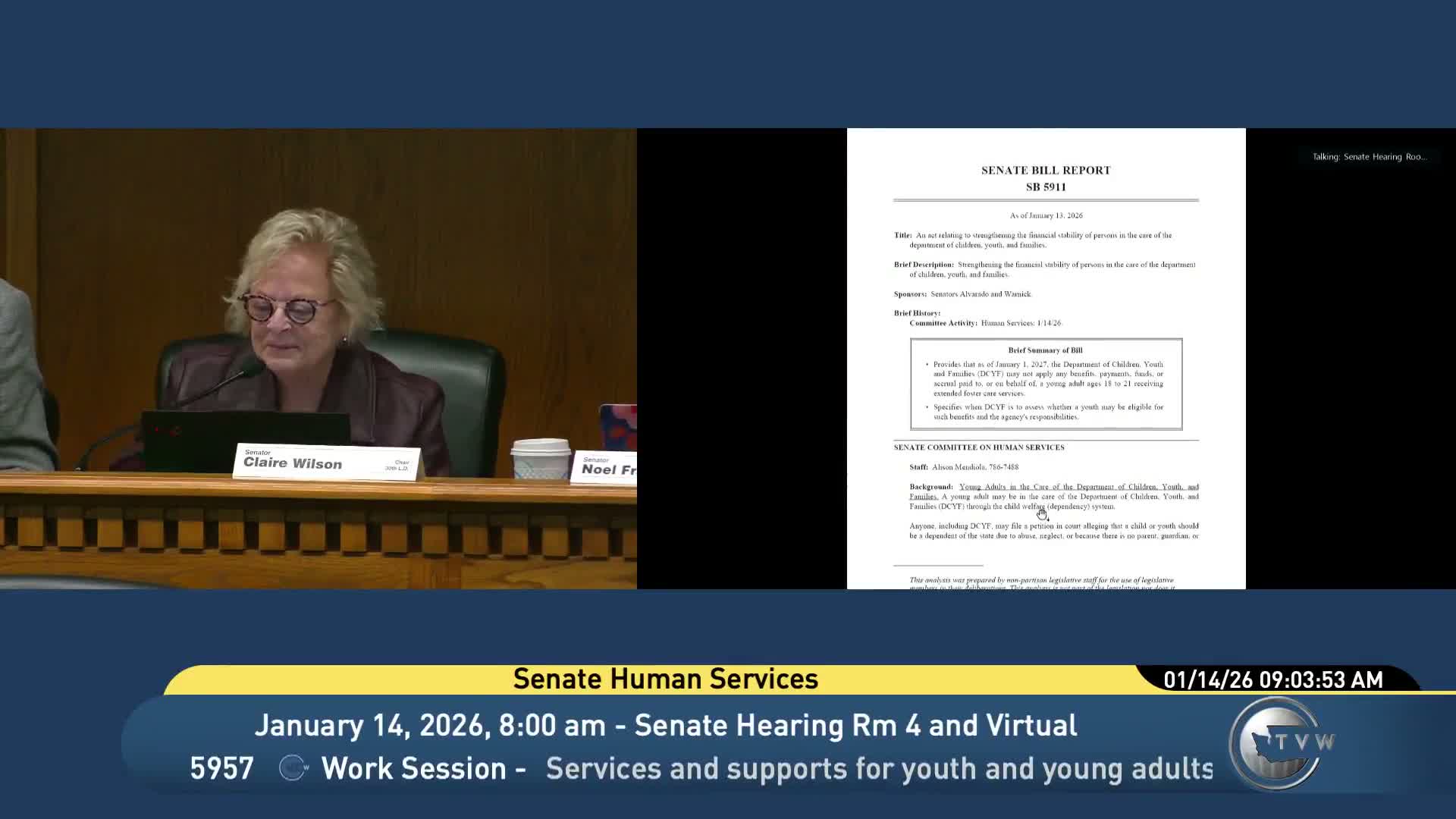
Senate staff and advocates presented Senate Bill 5911 to the Senate Human Services Committee, a measure that would bar the Department of Children, Youth, and Families from applying a person’s federal Social Security benefits to reimburse the state for care when that person is receiving extended foster care services.
Allison Mendiola, committee staff, summarized the bill’s key provisions and fiscal estimate: effective Jan. 1, 2027, DCYF may not use Social Security or similar federal benefits paid to or on behalf of an extended foster care (EFC) participant to offset the cost of care; the bill directs DCYF to assess and help youth obtain benefits and to assist with payee and account arrangements. Staff noted an estimated fiscal-year cost from lost revenue around $518,000 and an approximate biennial impact of $2.0 million (staff fiscal note language). The fiscal estimates were described as preliminary and based on recent modeling by committee fiscal staff.
Sponsor Sen. Emily Alvarado (34th Legislative District) said the benefits legally belong to the child or young adult and that the practice of applying them against the state’s cost of care can occur without the youth’s knowledge or consent. “These are adults; this money will make a huge difference for them so they can buy life’s essentials,” Alvarado said, adding the bill was narrowed to reduce budget impact and focused on 18–21-year-olds in extended foster care.
Advocates and legal services organizations urged passage. Kim Justice (Partners for Our Children) said the bill corrects what she called an unjust practice that forces young people with disabilities to finance their own care. Arthur Longworth (TeamChild, legal aid) testified his organization routinely sees harms when benefits are taken, including eviction and disrupted education. Taylor Campbell, a former foster youth who said she qualified for SSDI while in care, described leaving care without benefits and asked the committee to support measures that ensure youth are informed about and can access benefits while still in care.
Committee members asked staff about federal guidance and whether the change would interact with housing programs; staff noted federal agencies have signaled movement away from the practice and that intersections with other income-eligibility rules (for housing, for example) would need staff clarification.
The hearing record for SB 5911 includes multiple advocacy organizations and former foster youth in support. There was no final committee action recorded in the hearing; Chair Wilson closed the hearing after testimony and questions.