Get Full Government Meeting Transcripts, Videos, & Alerts Forever!
Get email alerts on the Lead Cookware Policy topic
No spam. Unsubscribe anytime.
Health experts warn bill would weaken lead limits in cookware; industry calls for clearer testing standards
Summary
Senate Bill 59‑75 would narrow the definition of covered cookware, delay a 10 ppm lead deadline to 2030 and permit alternate testing methods; public‑health officials and advocates said the changes would weaken protections and risk increased lead exposure, while industry urged clarity on an enforceable compliance test.
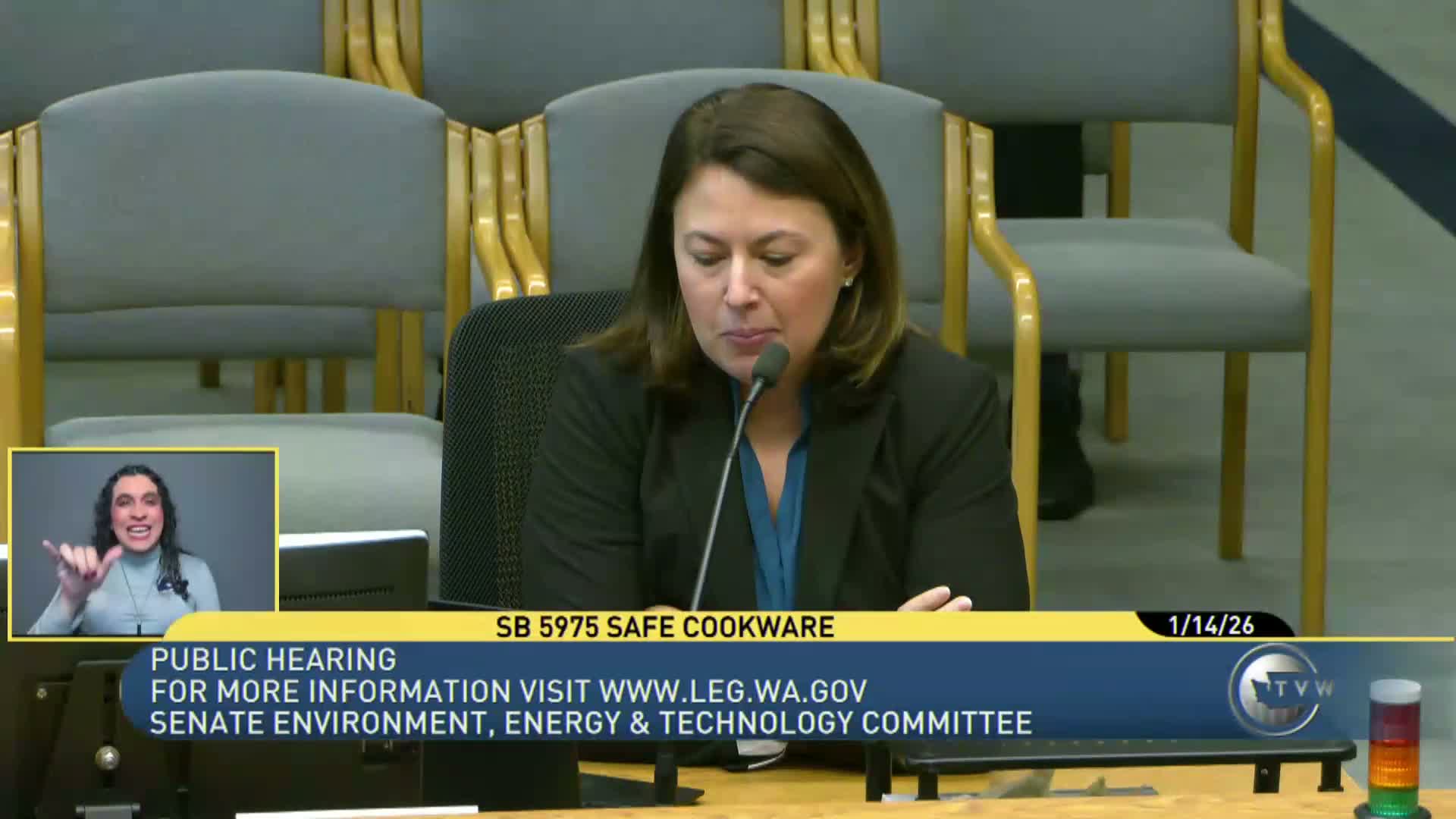
Senate Bill 59‑75 returned to the Senate Environment Committee for a third year of consideration on Friday, with public‑health experts and environmental advocates saying the proposal would undercut recent protections limiting lead in cookware and industry representatives urging clearer, enforceable test methods.
Alicia Kinney Clawson briefed the committee that the bill would modify the definition of covered cookware, exclude cookware with incidental or de minimis lead, extend the date to meet a 10 parts per million (ppm) limit to 2030, and allow manufacturers to demonstrate compliance using government‑accepted testing from the U.S. Food and Drug Administration or the European Directorate for the Quality of Medicines and Health Care technical guidance.
Public‑health witnesses from the Department of Health and local public‑health programs pressed the committee to preserve strong limits. Dr. Katie Fellows of King County called Washington’s existing law "the most health protective in the nation" and said SB 59‑75 would delay progress and increase unnecessary exposure. Dr. Holly Davies, a toxicologist at the State Department of Health, said there is no known safe level of lead and that shifting to leachate testing and broad exemptions risks underestimating real‑world exposure because coatings wear and leaching can increase over time.
Advocates presented testing evidence and consumer‑safety recommendations. Tom Neltner of Unleaded Kids and other experts urged the committee not to replace straightforward total‑content measures with leach testing and warned that an 'incidental/unavoidable' exemption could become a loophole allowing many products to remain on shelves.
Industry representatives and retailers said they want to remove ambiguity about how manufacturers show compliance. Charlie Brown and Jacob Cassidy of the Association of Home Appliance Manufacturers and Crystal Leatherman of the Washington Retail Association asked for a clear, implementable test and processes that would allow lawful importation and sales without undue enforcement risk. Manufacturers said some existing tests (grind/total metals) are protective but that the state needs a published enforcement standard.
Committee members asked agency witnesses whether a formal enforcement test exists; the Department of Ecology said chemists are developing a Washington‑specific enforcement test and that other screening tests exist but are not yet adopted for enforcement. Senator Harris and others pressed for transparency so manufacturers know how to comply.
The committee closed the hearing; staff reported 609 non‑testifiers and sign‑in tallies of 54 pro, 552 con and 3 other in the record.