Get Full Government Meeting Transcripts, Videos, & Alerts Forever!
Get email alerts on the Carryout Bag Policy topic
No spam. Unsubscribe anytime.
Senate committee hears mixed testimony on bill to ban single‑use plastic carryout bags and raise paper fee
Summary
Senate Bill 59‑65 would prohibit single‑use and reusable film plastic carryout bags, raise the paper‑bag fee from 8¢ to 20¢, exempt SNAP/WIC/EBT customers and add penalties for manufacturers; environmental groups urged passage while retailers, grocers and manufacturers warned of costs, enforcement and supply impacts.
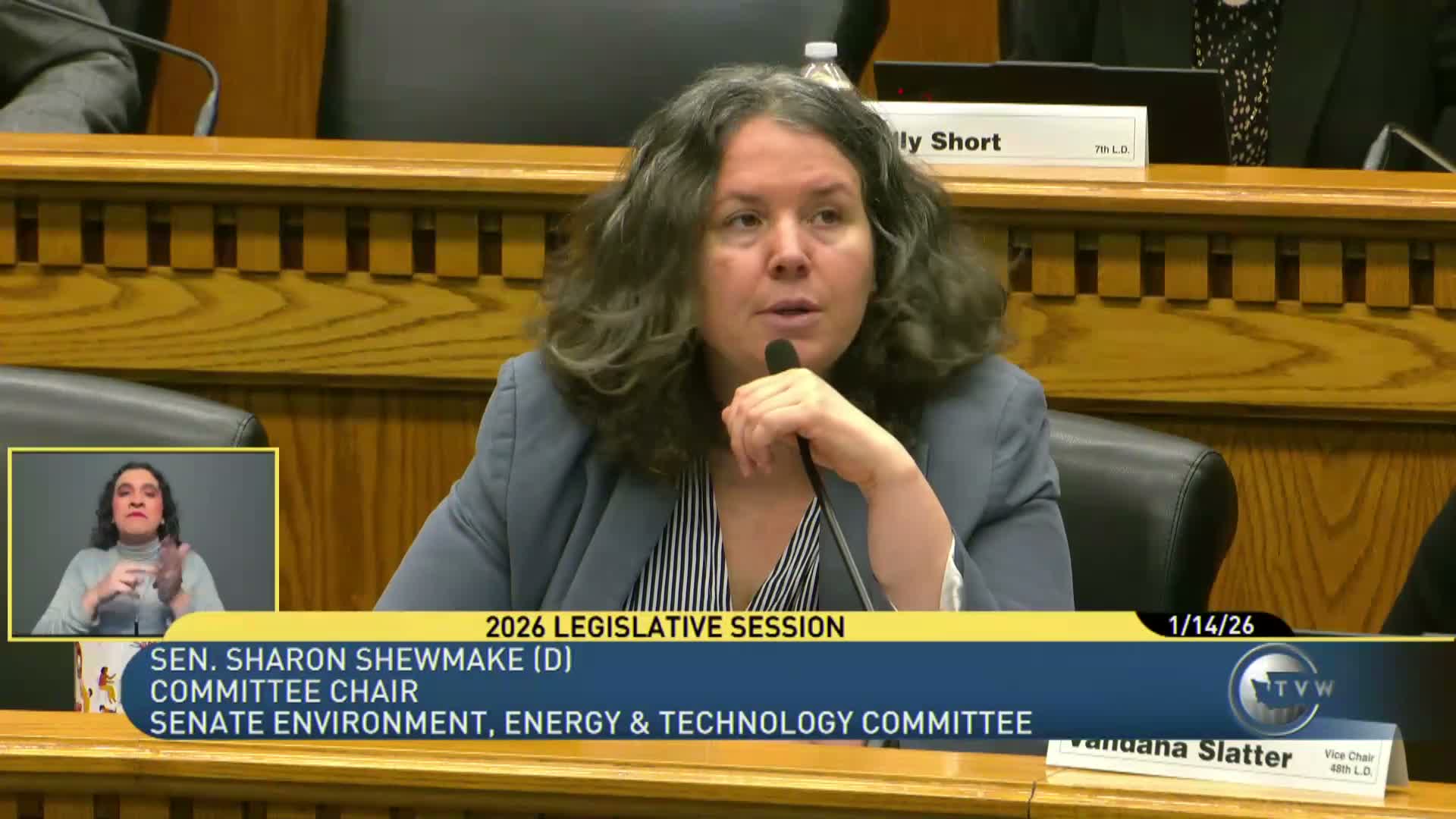
The Senate Environment Committee on Friday heard more than two hours of testimony on Senate Bill 59‑65, which would ban single‑use film plastic and reusable film carryout bags, allow paper bags and raise the paper bag pass‑through charge from 8¢ to 20¢.
Alicia Kinney Clawson, staff to the committee, told lawmakers the bill would prohibit specified plastic carryout bags, increase the paper fee to 20¢, exempt customers using WIC, SNAP and other cash and food assistance benefits from the fee, and add penalties for manufacturers or distributors who violate the statute. The staff fiscal note in the record estimated $9,900,000 in sales tax revenue and identified operating costs to the Department of Revenue and Department of Ecology.
Supporters framed the measure as an environmental and public‑health step. Peter Steelquist, Washington policy manager for the Surfrider Foundation, said the assumption that thicker reusable bags were widely reused had proved false: "The idea that these thicker bags are reused has proved to be a myth," he said, and urged lawmakers to follow California and Oregon. Miguel Marzoff of the Seattle Aquarium and Maggie Use of Seattle Public Utilities cited shoreline and marine impacts, with Use saying state data show a resurgence of plastic in circulation since the earlier statewide law took effect.
Opponents included hospitality, retail and manufacturing representatives who said implementation timing, enforcement and cost distribution remain unresolved. Carrie Dolan of the Washington Hospitality Association said restaurants rely on some plastic packaging for tamper evidence in takeout and asked the committee to retain an allowance for foodservice and to remove the fee for paper bags used in takeout and delivery. Molly Hoffenroth of the Washington Food Industry Association and Crystal Leatherman of the Washington Retail Association urged waiting to study consumer behaviour after last year's increase to 12¢, citing potential checkout friction and supply concerns.
Industry groups pressed for a later implementation date and warned a 20¢ paper fee could functionally restrict the paper option. Brandon Huskeeper of the Northwest Grocery Retail Association asked for a 2028 implementation timeline to address supply chain issues; Ivy Britton of the American Recyclable Plastic Bag Alliance said manufacturers had invested to meet recycled‑content standards and pointed to a WSU study showing about a 50% reduction in bag use following fee implementation.
Lawmakers pressed witnesses on specifics. Senator Harris asked how the 20¢ price was determined; staff and testifiers said it reflected stakeholder negotiations and a combination of cost and fiscal‑note estimates. Committee members also asked whether the bill applies to grocery‑sized carryout sacks (staff confirmed it applies only to bags distributed to consumers at retail establishments, with size specifications in the bill).
The chair closed the SB 59‑65 hearing without a committee vote. The clerk recorded sign‑in totals in the hearing record (transcript lists approximately Pro 541, Con 695, Other 4 and 1,240 non‑testifiers). The bill will return for committee consideration on a later date if scheduled.