
Taylor County board advances sales‑tax and millage referendum after poll shows initial support
Get AI-powered insights, summaries, and transcripts
Subscribe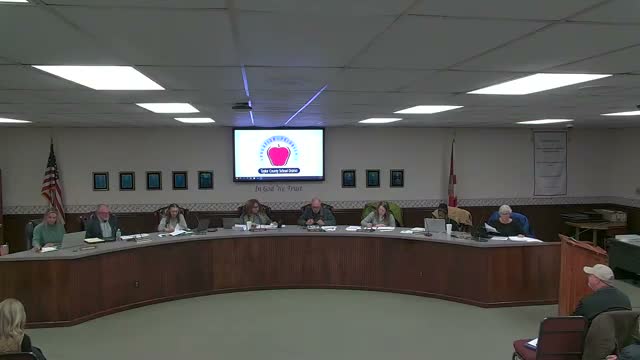
Summary
After a Clearview Research poll showed early majority support for two ballot options, the Taylor County School Board voted to begin the referendum process for a four‑year 1‑mill operating levy and a half‑cent discretionary sales surtax; staff said the sales tax could raise about $1.8 million annually.
Steven Van Cor of Clearview Research told the Taylor County School Board on Jan. 28 that a stratified, live‑caller poll of county voters produced topline support for two options under consideration. "When we asked that question, it came out at 63, yes, 26, no," Van Cor said of a proposed 1‑mill levy to fund operations for four years. He reported the half‑cent sales surtax question polled about 59% to 36%.
Van Cor emphasized that poll results are a snapshot and that undecided voters often break to "no" by Election Day, urging careful ballot language and targeted messaging. He described the survey as a representative random sample, stratified to match the county's demographics and district turnout patterns.
Superintendent (unnamed in the transcript) and staff explained the policy tradeoffs to the board. Staff materials cited a Department of Revenue projection that a half‑cent discretionary sales surtax could yield roughly $1.8 million a year for capital outlay; district presentations also quoted an average household impact of about $49–$56 annually, depending on how the figure was calculated. Staff said sales‑surtax receipts are limited to capital‑outlay purposes (capitalized equipment, facility upgrades, and other long‑lived assets) and noted that capital outlay rules permit some transportation and technology costs to be capitalized.
Board members asked about cross‑tabs and subgroups (homeowners, business owners, age cohorts); Van Cor said detailed cross‑tabulations exist and the firm will provide them to staff. Several members and residents expressed concern about affordability for residents still recovering from recent storms and asked whether the board could instead raise millage within its existing authority.
After discussion, the board voted to move forward with the process that would place the referendum(s) on a future ballot. Board counsel and staff explained that the next steps include drafting a formal resolution, potential county approval, review by the supervisor of elections, required translations, and a separate vote on the final referendum language.
The board's action authorizes staff to continue legal and procedural work required to place one or both measures before voters; it does not finalize ballot language or a specific levy rate beyond the options discussed. The district said it would return with a resolution spelling out detailed terms, minimums, and timing.
What happens next: staff will draft the resolution and referendum language and return to the board for approval; the county and supervisor of elections must sign off before a question appears on the ballot.