Get Full Government Meeting Transcripts, Videos, & Alerts Forever!
Get email alerts on the Student Data And Assessments topic
No spam. Unsubscribe anytime.
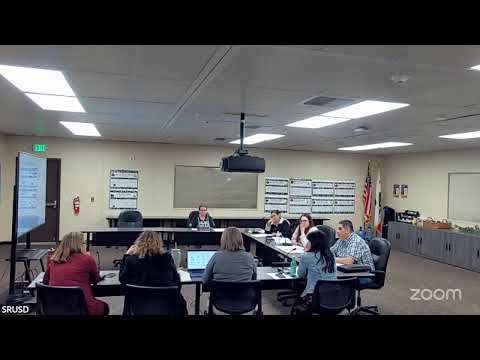
San Bernardino board reviews midyear student data, discusses DIBELS rollout as some members raise implementation concerns
Summary
At a midyear workshop the San Bernardino School Board reviewed California Healthy Kids Survey and state testing trends and heard details of a district rollout of the MCLASS DIBELS screening and MTSS monitoring for K–2. Board members praised supports but one raised concerns about testing time and teacher supports.
SAN BERNARDINO — The San Bernardino School Board spent its meeting reviewing midyear student data and the district’s plan to implement the MCLASS DIBELS reading screener for kindergarten through second grade, with trustees praising expanded supports for students while one trustee warned the screening could impose a heavy testing burden without more teacher support.
Becky, a district presenter, told the board the California Healthy Kids Survey and related site surveys are available on the district website and summarized key findings: “82 percent of our students reported feeling safe or very safe at school,” and 670 elementary students participated in the elementary survey. She said those data show strengths in school connectedness and adult support but also pointed to areas needing attention: “44 percent of our students noted that they experienced some kind of physical aggression, 28 percent reported cyberbullying, and 17 percent reported feeling frequently sad.”
Why it matters: The presentation tied survey results to district priorities and interventions — expanding counseling services, targeted social-emotional learning (SEL) programming and partnerships with higher-education providers — to reduce bullying, address declining connectedness in middle school and provide earlier, targeted literacy supports.
The board heard that the district will expand school-based mental-health supports and launch classroom SEL lessons delivered by school-psychology trainees through a partnership with California State University, Monterey Bay. The presenter named site leads and said the field placements would begin with planning and carry into twice-weekly SEL lessons at McKinnon, La Jolla and Santa Rita schools.
On assessments, district staff highlighted recent state test progress. The presenter said districtwide ELA results improved more than 11 points from the prior year, with gains across most subgroups, while noting some sites (including Santa Rita Union Elementary) faced higher transiency and showed smaller gains. The district also described district coaching, instructional walks and a planned adoption review for Eureka Math Squared and related leader supports.
DIBELS rollout and debate
A major portion of the workshop described the district’s selection and implementation of the MCLASS DIBELS reading screener, a State Board–approved tool the presenter said the curriculum council recommended after reviewing State Board–approved options. The presenter summarized the rollout steps used to onboard teachers and administrators: two-stage training (initial administration then data-use sessions), administrator calibration, progress-monitoring protocols and an MTSS escalation pathway for students who do not respond to interventions.
The presenter explained the screening logic and timelines: DIBELS uses brief subtests (one-minute measures such as letter names, phonemic awareness and nonsense-word fluency) with benchmarks that rise from beginning to mid to end of year; progress monitoring is planned every two weeks on targeted skills to check whether students respond to intervention. She contrasted DIBELS’ short, targeted checks with broader diagnostics such as i-Ready.
Not all trustees were convinced the system is ready. One board member said, “I’m not supporting what you’re doing as a board member, and I’m just gonna be really honest,” arguing that cumulative administration time — and the likelihood of many students flagged in “red” during an initial implementation year — could overwhelm teachers and produce noisy signals rather than clear, actionable identifications. The trustee urged more teacher-facing supports and clearer schoolwide protocols before a full rollout.
District staff acknowledged those concerns and said they plan additional professional development, school-level PLC time and coaching so that teachers understand how to administer DIBELS and use its brief progress-monitoring tools to adjust instruction. The presenter also emphasized that DIBELS is one part of a broader system intended to (1) identify students who need immediate, targeted practice on specific foundational skills and (2) track whether they respond to instruction before referring for specialized services.
Other board discussion and next steps
Trustees asked for follow-up details (for example, counts of long-term English learners and the number of students leaving or entering sites midyear) and for comparison reports at the next board meeting showing change over time. The presenter said the district will return at the next regular meeting with additional LCAP midyear metrics and noted that principals are discussing options for optional PD and calibration time.
Votes at a glance
- Motion to approve meeting agenda: passed 4–0. - Motion to adjourn closed session: passed 4–0. - Motion to approve consent agenda (items 5.1–5.2): passed 4–0. - Motion to adjourn meeting: passed 4–0.
What’s next: No formal policy actions were taken. The board scheduled its next regular meeting for Feb. 11, 2026. District staff will continue DIBELS onboarding, monitor early implementation, and report progress and follow-up metrics back to the board.
Reporting notes: The article relies on the district presentation of midyear survey and assessment findings and on trustees’ recorded questions and comments during the workshop.