
Mayor warns SB1 will force local choices: $300 credit may shift $15M burden to Hammond
Get AI-powered insights, summaries, and transcripts
Subscribe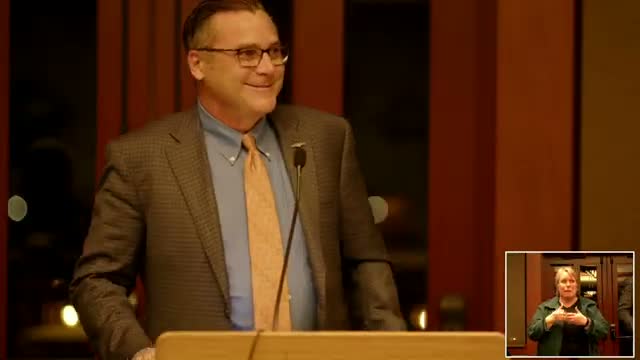
Summary
Mayor Tom McDermott told attendees that a recent state bill (SB1) will reduce property tax revenue and could force Hammond to cut services, pass local income taxes, or seek referendums; the city has imposed a hiring freeze and prioritized public safety while uncertainty persists.
At the Jan. 28 Mayor’s Night Out, Mayor Tom McDermott warned residents that a recent state measure he referred to as SB1 will reduce local property tax revenue and shift costs to municipalities. “They slashed our budget, Hammond's gonna lose $15,000,000,” McDermott said, describing a $300 state credit that he said would be paid for by cities unless local income taxes or other measures are adopted.
What the mayor said: McDermott argued the $300 credit offered by the state is not a net tax saving for many Hammond working households because local governments could respond with new taxes or cuts to services. Using a simplified example, he said a household that received a $300 credit could still face a higher local income tax if the city needs to replace lost revenue, resulting in a net loss for some families.
Local response: To prepare for budget uncertainty, the city has implemented a hiring freeze; McDermott said public-safety hiring continued because police and fire staffing is prioritized, but other vacancies are being held to avoid hiring workers the city might later have to lay off if revenue declines. He said the city recently enrolled seven new police officers into the academy and started a fire department class this month.
Fiscal math and risks: McDermott gave rough department budget figures (police about $38.8 million, fire about $25.7 million) and annual property-tax revenue around $107 million, saying roughly $75 million of that goes to police and fire wages. He cautioned that large state cuts could force municipalities to consider referendums or layoffs to keep core services funded.
Context and next steps: McDermott urged residents to understand the difference between headline tax credits and local budget reality, and encouraged public participation in the electoral process. He said the city is preparing but did not announce specific local tax proposals; the mayor encouraged residents to track developments and engage with city staff through Hammond 311 for constituent issues linked to service priorities.