Committee backs Literacy Academy Collective after presentation on dyslexia-focused schools
Loading...
Summary
The Schools and Education Committee heard from Emily Helmstrom of the Literacy Academy Collective about dyslexia-focused public schools, state and private pilot funding, and teacher-prep reforms; the committee voted unanimously to draft and support a resolution urging continuation of NYC Reads funding and expansion of LAC.
The Schools and Education Committee on Jan. 2026 heard a presentation from Emily Helmstrom, director of external affairs and strategy at the Literacy Academy Collective (LAC), about the nonprofit’s dyslexia‑focused public schools, its pilot programs and a request that the committee back continued funding for the citywide NYC Reads initiative.
Helmstrom told committee members that literacy is “the most significant civil rights issue in New York City” and cited National Assessment of Educational Progress (NAEP) results showing persistently low reading proficiency, with particularly poor outcomes for students with disabilities, multilingual learners and Black students. She said reading researchers and federal health agencies indicate about “95 percent of students can learn to read if given the right reading instruction.”
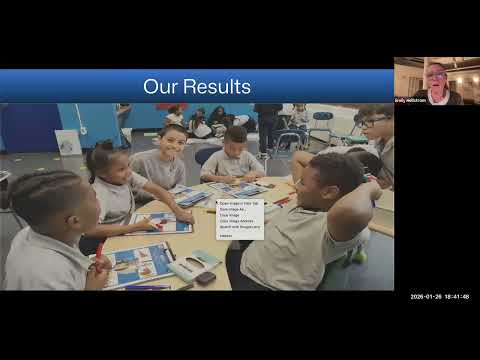
The presentation described LAC’s full‑school intervention model for students who are often two to three years behind in foundational reading by second grade. Helmstrom said LAC opened South Bronx Literacy Academy in 2024 and launched Central Brooklyn Literacy Academy in fall 2025, and that students in LAC schools are making accelerated gains. “We are really seeing 3 to 4 times the expected rate” of improvement on some decoding measures, she said, adding LAC uses weekly progress monitoring and an intensive daily foundational reading block to drive that progress.
Helmstrom also reviewed LAC’s policy and higher‑education work, saying the organization has pushed for more rigorous literacy review at the state level. She said the group helped secure funding in the state budget for two New York State Education Department (NYSED) positions (about $230,000 per year each) intended to strengthen program review and site visits focused on evidence‑based literacy instruction. LAC also raised roughly $6 million to support 11 pilot campuses and engaged two technical assistance providers — The Reading League and Deans for Impact — to work with teacher‑preparation programs on syllabi alignment and faculty training.
Committee members asked detailed questions about how LAC achieves rapid gains, how a middle school would be staffed and organized (grouping by skill rather than strictly by grade), how multilingual learners are served, and the sustainability of funding. On sustainability, Helmstrom said LAC relies on a blend of NYC Public Schools special allocation memos (SAMs), fair student funding (for students in temporary housing, multilingual learners and Title I), and nonprofit fundraising; she said LAC’s nonprofit operates on roughly $2.5 million yearly, much of which pays for teacher training and an in‑school specialist that LAC funds directly.
Chair Patricia Laria thanked Helmstrom and said the committee would draft a resolution urging continued support for NYC Reads and for LAC’s expansion. After a brief business session, the committee conducted a voice/roll check and the chair reported that “everyone present says yay,” recording unanimous committee approval to support a resolution backing LAC’s work and continuation of NYC Reads funding.
Helmstrom invited committee members and attendees to a free virtual screening of the documentary Left Behind on Feb. 10 and said she would circulate the slide deck and links to resources for families and schools. Chair Laria said staff would circulate attendance and the presentation materials to the committee as a follow-up.
The committee’s next procedural step is to draft and circulate the formal resolution for the full board to consider; meeting participants indicated they planned to ask the governor’s office, NYSED and New York City Public Schools leadership to sustain the state and city funding that supports the pilot work.