Get Full Government Meeting Transcripts, Videos, & Alerts Forever!
Get email alerts on the State Budget topic
No spam. Unsubscribe anytime.
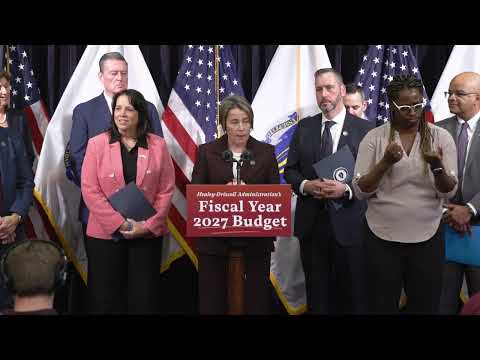
Governor Healy files $62.8 billion FY27 budget emphasizing controlled growth and affordability
Summary
Governor Healy filed a $62.8 billion fiscal year 2027 budget that the administration says limits spending growth to about 1%, protects core services for vulnerable residents and directs new and supplemental surtax funds to education, transportation and a stabilization fund.
Boston — Governor Healy on Tuesday filed a $62,800,000,000 fiscal year 2027 budget that the administration described as a restrained spending plan focused on affordability, core services and targeted investments.
Healy said the proposal represents a 1% increase over current spending and is "below the rate of inflation," describing it as the lowest proposed growth rate of his administration. "We can't bankrupt our state" in response to federal funding cuts, he said, framing the budget as a protective response to reductions in national programs.
The administration said House 2 contains a $60.1 billion baseline and that about $2.7 billion in fair‑share surtax revenue is available to program within the budget. Secretary of Administration and Finance Matthew Gorkowitz said the administration will also file a supplemental budget to spend $1.15 billion in surplus surtax revenue from FY25.
Gorkowitz said the surtax and the Medical Assistance Trust Fund (MATF) are dedicated revenue streams and that standard comparisons of growth often exclude those funds. "The surtax is constitutionally dedicated to education and transportation," he said, and the administration has taken a conservative approach to programming those dollars.
The budget prioritizes health‑care continuity, education, transportation, housing and targeted affordability measures. Healy highlighted measures intended to keep health care coverage for residents losing federal coverage and said the plan "includes the strongest program in the country to keep health care costs low for middle class families and for small business owners." Lieutenant Governor Driscoll added that the proposal dedicates $10.4 billion in local aid, a $438 million (4.4%) increase over the previous year, and fully funds the sixth year of the Student Opportunity Act.
Officials said the administration balanced the budget without introducing new taxes or fees and emphasized program integrity and efficiency. Gorkowitz also said the administration is adopting task force recommendations to add multi‑year forecasts and economic stress tests to budget planning and to increase recurring resources for disaster relief and resiliency.
The governor defended the administration's approach when pressed about apparent larger growth rates once surtax and MATF spending are included, and he said the administration will continue to press for efficiencies and for measures to reduce costs for housing, energy and health care. He also noted the administration's intent to work with the legislature on the proposal.
The administration did not present formal votes or legislative approvals; the budget will proceed through the Legislature for consideration.