Get Full Government Meeting Transcripts, Videos, & Alerts Forever!
Get email alerts on the Constitutional Violations topic
No spam. Unsubscribe anytime.
Witnesses tell Minnesota Senate panel federal "Operation Metro Surge" violated constitutional rights, lawyers say
Summary
Legal advocates and affected residents told a Minnesota Senate subcommittee on Jan. 29 that a large federal enforcement operation in the Twin Cities produced widespread constitutional violations, deaths of two observers and obstacles to counsel for detainees; witnesses urged legal and legislative remedies.
John Bealer, policy counsel for the American Civil Liberties Union of Minnesota, told a Jan. 29 hearing of the Minnesota Senate select subcommittee on federal impacts that recent federal enforcement activity—described by witnesses as "Operation Metro Surge"—has produced numerous violations of constitutional rights. "What we have witnessed in the last two months ... is one of the largest deprivations of constitutional protections in the history of our state," Bealer said.
Bealer, joined by Teresa Nelson, legal director for the ACLU of Minnesota, cited lawsuits including Tincher and Hussein and told the committee that a federal judge found "at least 96 orders violated across 74 cases" in recent weeks. Bealer said the ACLU’s reporting portal has received more than 500 reports of alleged violations, and that many detainees have been transferred out of Minnesota to facilities in Texas and elsewhere, hindering access to counsel.
Julia Decker, policy director for the Immigrant Law Center of Minnesota, testified that detainees are frequently moved within hours to out-of-state facilities, creating "serious access to counsel issues." She added that lawyers often cannot find where clients have been taken and that phone and signature logistics make representation difficult.
University of Minnesota clinical professor Linus Chan testified the enforcement strategy appears designed to create fear and "self-deportation," and that people with previously protected immigration statuses are being detained. "This is deliberate," Chan said, "they are using detention to drive people to leave even when they have legal rights to fight their cases."
Members of the committee raised questions about the legal basis for warrantless home entries and detainer practices. In response, ACLU witnesses said they disagree with DHS assertions permitting warrantless entry and emphasized that the Fourth Amendment requires a warrant except in limited circumstances; they said those legal theories will be tested in court.
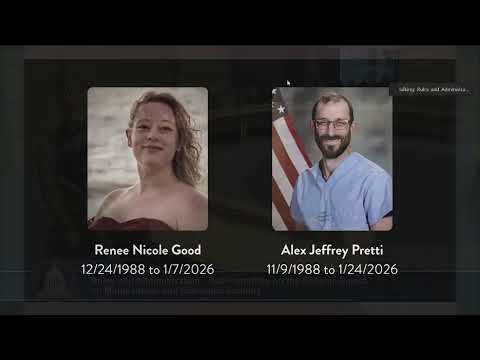
The hearing opened with a moment of silence for Renee Macklin Goode and Alex Pretti, both of whom panel members and witnesses said were killed during interactions with federal agents. Attorney Antonio Romanucci, representing the Goode family, urged the committee to press for accountability and described legal barriers to suing federal officers, including the narrowed reach of the Bivens doctrine and the limitations of the Federal Tort Claims Act.
Romanucci proposed two paths for accountability: Congress could amend 42 U.S.C. §1983 to clarify that federal officers are suable when they violate constitutional rights, or the Minnesota Legislature could create a state-law tort that mirrors constitutional protections to allow suits against federal officers in state courts.
The committee did not take formal votes. Chair Senator Lindsey Porte closed the hearing by saying one lawless agent is too many and adjourning the session.
The subcommittee heard multiple requests for further documentation from federal agencies and for legislative steps to protect residents and enable accountability.