Get Full Government Meeting Transcripts, Videos, & Alerts Forever!
Get email alerts on the Comprehensive Plan topic
No spam. Unsubscribe anytime.
Consultants outline community-driven master plan for Jonesboro, including weeklong charrette and 18-month schedule
Summary
Consultants DPZ, Crafton Tull and Urban3 presented a proposed comprehensive master plan process for Jonesboro focused on parcel-level fiscal analysis, robust community engagement and a seven-day charrette; consultants estimated an approximately 18-month timeline to adoption.
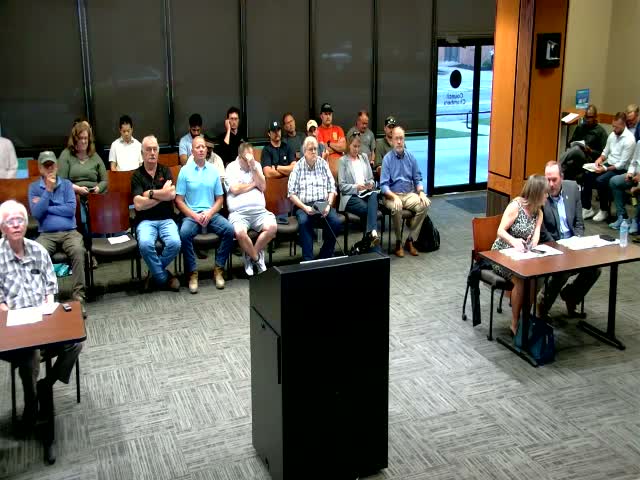
Consultants hired to lead Jonesboro’s long-awaited comprehensive plan told the City Council on July 15 that the effort will center on intensive community engagement and technical analysis designed to produce an executable 15–20 year roadmap for the city.
Mayor Harold Copenhagen introduced the team and framed the undertaking as a necessary update: “The last comprehensive plan approved by council was about 30 years ago,” he said, adding the effort should include professional research, broad public input and practical, achievable recommendations.
Dave Roberts of Crafton Tull and Matt Lambert of DPZ described the team’s roles. “DPZ is going to be the team that leads this effort,” Roberts said. Julie Kelso of Crafton Tull told council that engagement will be continuous: “Community engagement happens throughout.” The consultants said they will use in-person meetings, stakeholder interviews, online surveys, GIS story maps and a public dashboard to gather and share feedback.
Central to the outreach will be a seven-day, on-the-ground charrette in Jonesboro — a design workshop during which residents and professionals co-create and test ideas. Julie Kelso described the format as a week of public-facing studio work that culminates in a large public meeting to present findings and test concepts.
Consultants also flagged fiscal analysis as a planning foundation. Matt Lambert described parcel-by-parcel work with Urban3 to assess how different land uses and housing forms contribute property and sales tax that pay for city services. He cited a recent Bentonville analysis projecting roughly $1,600,000,000 in long-term infrastructure liabilities under certain growth patterns and said the team will test alternative scenarios aimed at aligning growth with fiscal sustainability.
The firm outlined four phases: (1) inventory and diagnostics, (2) the charrette and concept development, (3) plan drafting and refinement, and (4) implementation planning and adoption. Implementation steps include prioritization, phasing, assignment of responsible parties and timing tables to track projects.
On schedule, the consultants suggested the overall effort could be completed in about 18 months but cautioned the timeline could lengthen or shorten depending on council and community review needs.
Next steps identified during the meeting included further coordination with council committees and city staff, development of a public engagement plan, and scheduling of the charrette. The consultants said they will return with a refined schedule and engagement plan for council consideration.