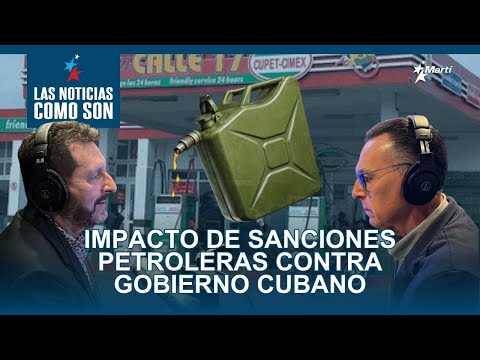
U.S. emergency declaration raises prospect of diesel shortages and months of hardship in Cuba, expert warns
Loading...
Summary
In a Radio Martí interview, energy expert Jorge Pin warned that a U.S. presidential emergency order targeting petroleum shipments to Cuba could leave the island short of diesel and other transport fuels within weeks, hitting public transport, power generation and food distribution.
A U.S. presidential executive order declaring a national emergency over an "unusual and extraordinary" threat tied to Cuba and authorizing extra tariffs on countries that ship petroleum to the island could sharply reduce fuel deliveries, an energy specialist told Radio Martí.
"Es un apagn, un apagn no solamente desde el punto de vista de electricidad, pero un apagn desde el punto de vista de la energía, especialmente ahora los combustibles líquidos, como es, por ejemplo, el disel," Jorge Pin, director of the energy program for Latin America and the Caribbean at the University of Texas, said in a phone interview. Pin cautioned that diesel is the "critical" fuel that runs public buses, road transport, trains, generators and water pumps.
Why it matters: Cuba consumes roughly 100,000 barrels per day, Pin said, while domestic production of heavy, high-sulfur crude is about 40,000 b/d and cannot be refined into transport fuels by Cuban refineries. That leaves an estimated shortfall of roughly 60,000 b/d for diesel and gasoline; without external shipments, Pin warned, Cuban society could face months of intensified shortages affecting electricity, transport, agriculture and industry.
Pin declined to give a single "days of reserves" figure and said his team prefers a range: "in the next 4, 8 weeks, ... if we don't see a ship on the horizon Cuba begins to have a very serious situation," he said. He cited a recent documented arrival: the tanker identified on air as the Ocean Meriner, which came from Pajaritos, Mexico, on Jan. 9 with about 85,000 barrels. Beyond that ship, he said, "we haven't seen any other ship" from Venezuela, Mexico or Russia in recent weeks.
Historical suppliers and current constraints: Pin recounted the island's main sources: Venezuela historically supplied the largest share (often on barter or credit), Mexico was the second-largest supplier (mainly crude), and occasional Russian deliveries occurred. He said current financial sanctions and banking restrictions make clandestine or third-party transactions much harder than in earlier embargoes, and that companies and states will reconsider shipments if threatened with U.S. tariffs.
On-the-ground impacts: Pin said the consequences would extend beyond rolling power cuts. He described potential disruptions to harvesting (noting reports that sugar producers in the province of Gramma were already seeking manual laborers), diminished transport of food from rural areas to cities, constraints on nickel operations tied to Moa, and reduced availability of LPG cylinders used for cooking.
Short-term options and diplomacy: The guest suggested one possible temporary solution: using Venezuelan crude physically held by the United States as a bargaining tool to supply Cuba while negotiations proceed. "Possibly the temporary salvation of Cuba is that the United States gives Cuba Venezuelan crude that is not in Venezuelan hands, but in U.S. hands," Pin said. He framed such transfers as politically charged and as leverage to push for policy changes by the Cuban government.
The hosts read parts of the executive order that allow the president to modify measures if affected countries take steps aligned with U.S. security or foreign-policy objectives. They stressed that the order contains clauses for modification if a country demonstrates "significant" action to address the declared emergency.
What remains uncertain: Pin emphasized a number of unknowns: exact tank inventories at Cuban refineries, which tanks are operational, and whether third-party "ghost" tankers could succeed circumventing enforcement. He also said Russia supplying Cuba in significant volume was unlikely in the near term, and that even countries that voiced opposition to the U.S. measures (China, Mexico) face limits because deliveries must cross by ship and may expose carriers to financial risk.
The takeaway: "For the ordinary Cuban, I think very difficult months are coming," Pin said. The program's hosts closed by noting the situations trajectory depends on whether Cuba, potential interlocutors and the United States open negotiations in the coming weeks.
Sources: On-air interview with Jorge Pin; hosts Amado Gil and José Luis Ramos read provisions of the executive order and discussed recent reporting of tanker movements.
Next steps: The guest and hosts agreed to revisit the topic before the 60-day window Pin identified as critical for finding a diplomatic or transactional remedy.