
Vermont judiciary committee hears sharp divide over proposed statute of repose
Get AI-powered insights, summaries, and transcripts
Subscribe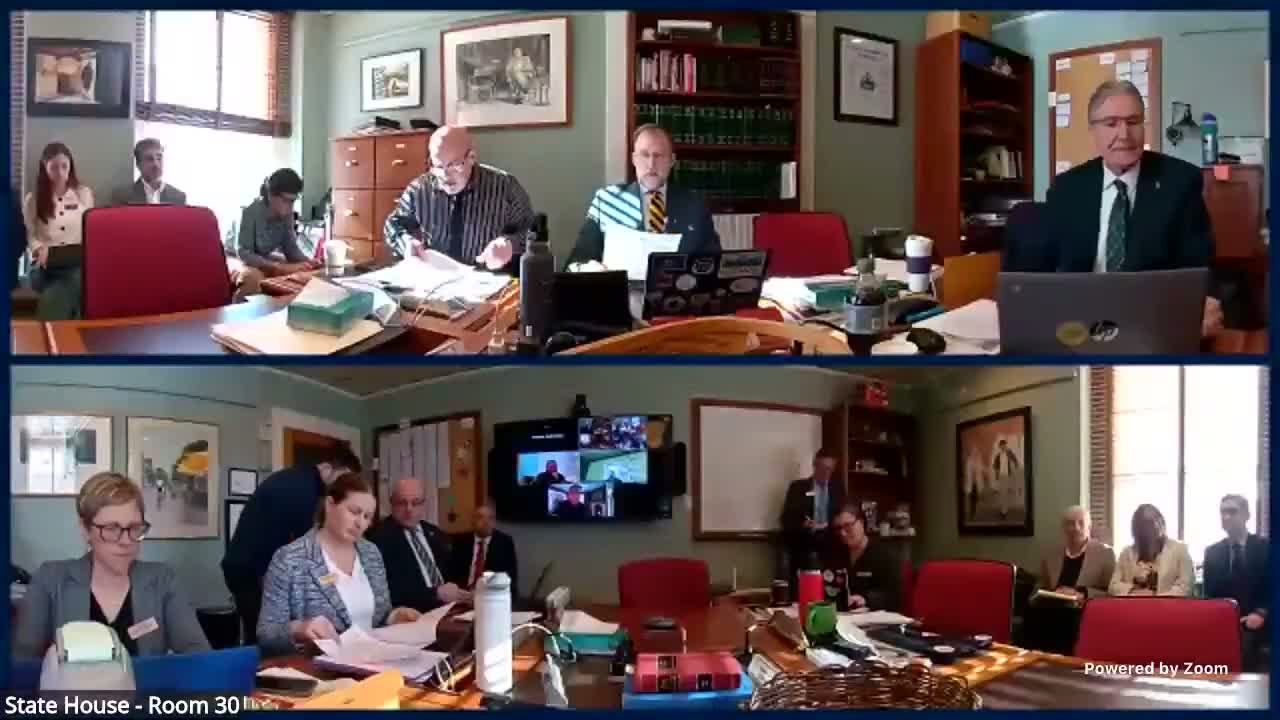
Summary
Witnesses for the construction industry urged a 5–6 year statute of repose to limit long tail liabilities and lower insurance costs; plaintiff‑lawyers and public‑interest advocates warned a six‑year bar would create sweeping immunity that can block claims for serious latent harms, including school contamination and defective foundations.
A legislative hearing on Jan. 30 drew competing testimony over H.589, a bill that would bar most construction‑related legal claims after a fixed period. Supporters from the construction and insurance industries told the Judiciary committee the change would bring predictability, encourage bidding competition and reduce insurance and business costs; opponents said the measure would function as broad immunity and deny long‑latency victims a remedy.
Adam Osha, a senior client executive at 1 Digital Insurance, told the committee that without a statute of repose contractors and insurers face an unpredictable “tail” of liability that drives up bid prices and reduces the pool of bidders on design‑build projects. "I would put 5 years," Osha said when asked what term he would recommend; he added that many contractors could see premium reductions of 10%–25%, with about 20% a reasonable midpoint.
Contractors echoed that view. Rob Higgins, president of Negley and Chase Construction, and Chris Huston, vice president of preconstruction at ReArc Construction, said indefinite liability deters investment and makes Vermont less competitive with neighboring states. Alan Parent, senior director of business development at PC Construction, recounted settling a large claim tied to a 20‑year‑old sprinkler failure; Parent said prolonged defenses divert staff time and that a six‑year limit would reduce that burden for smaller firms.
Opponents pressed a different set of concerns. Kristen Ross, immediate past president of the Vermont Association for Justice and an Upper Valley lawyer, described cases she said would be barred under a six‑year carve‑out — including a New Hampshire YMCA glass failure that caused severe injury 12 years after construction, long‑running condominium foundation failures, and litigation tied to Burlington High School claims alleging harmful building materials. "This is an immunity bill," Ross said, arguing the state constitution guarantees Vermonters a remedy for injuries and that repose statutes eliminate the discovery rule and the ordinary statute of limitations protections.
Attorney Richard Rubin urged lawmakers to weigh who ultimately bears the cost of latent defects. Rubin said the state, municipalities and taxpayers often absorb replacement costs when negligent design or construction problems emerge after many years. "You're basically giving people immunity when they're wrongdoers," he said, arguing existing protections — discovery rules, the need to prove negligence, and jury processes — already constrain frivolous claims.
Committee members asked detailed questions about how the bill would apply to phased projects, whether warranties and inspections would affect outcomes, and the empirical size of insurance savings. Witnesses generally agreed that, for phased work, repose should run from each phase’s substantial completion. On insurance, proponents argued that limiting the tail reduces the need for large excess policies; opponents said the savings are small relative to overall project costs and that any benefit primarily flows to contractors or insurers rather than to taxpayers or consumers.
The committee did not vote on H.589 at the hearing. Members requested written materials referenced by witnesses and said they would post submissions to the committee’s online record. The committee adjourned at the close of the session; no final action was taken on the bill during the meeting.