
Subcommittee advances parking‑reform bill to cap minimums near transit amid mixed responses
Get AI-powered insights, summaries, and transcripts
Sign Up Free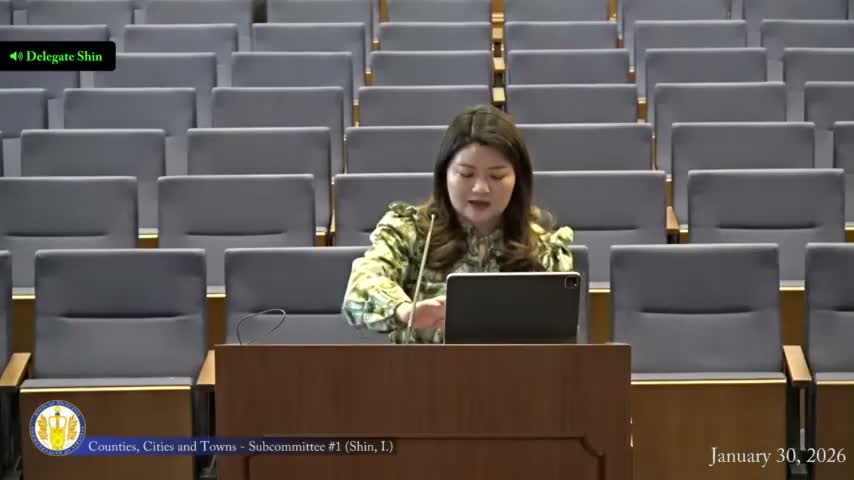
Summary
HB 888, which caps parking minimums in designated transit‑served and high‑density areas to reduce development costs and support transit‑oriented development, drew robust testimony from housing advocates, local governments and developers; the subcommittee moved to report the measure with a substitute after significant debate about local flexibility and business impacts.
The County, Cities and Towns Subcommittee voted to report House Bill 888, a measure that would limit off‑street parking minimums in designated areas served by transit or planned for higher density. The proposal would cap parking at 0.5 spaces per multifamily unit in specified transit‑oriented or revitalization areas and 1 space per unit for single‑family and townhouse developments, while allowing developers to provide more parking voluntarily.
Supporters — including Alexandria and Arlington representatives, housing and smart‑growth advocates, and the Home Builders Association — said reducing parking mandates can lower construction costs, allow more housing units on a site, and support walkable, transit‑oriented communities. "Parking reform can boost home building by 40 to 70% and reduce housing costs by 17%," testified Becca Diedert of the Coalition for Smarter Growth, citing research presented to the committee.
Opponents and cautious witnesses, including commercial‑real‑estate and developer groups, warned that striking language referencing off‑street parking requirements could be read to remove local flexibility (for example, to set parking maximums) and could shift parking demand onto public streets and affect restaurants and retail. Committee members asked legal counsel about the statutory effects of the specific language change; counsel did not offer a definitive ruling during the hearing. After debate and virtual testimony from national and local housing research groups, the subcommittee moved the bill forward with a substitute and an incorporated companion provision, leaving further legal and drafting questions for later stages.