Get Full Government Meeting Transcripts, Videos, & Alerts Forever!
Get email alerts on the Local History topic
No spam. Unsubscribe anytime.
Historian at New Rochelle event traces Latino roots to Antonio Valencia and highlights growing Hispanic community
Summary
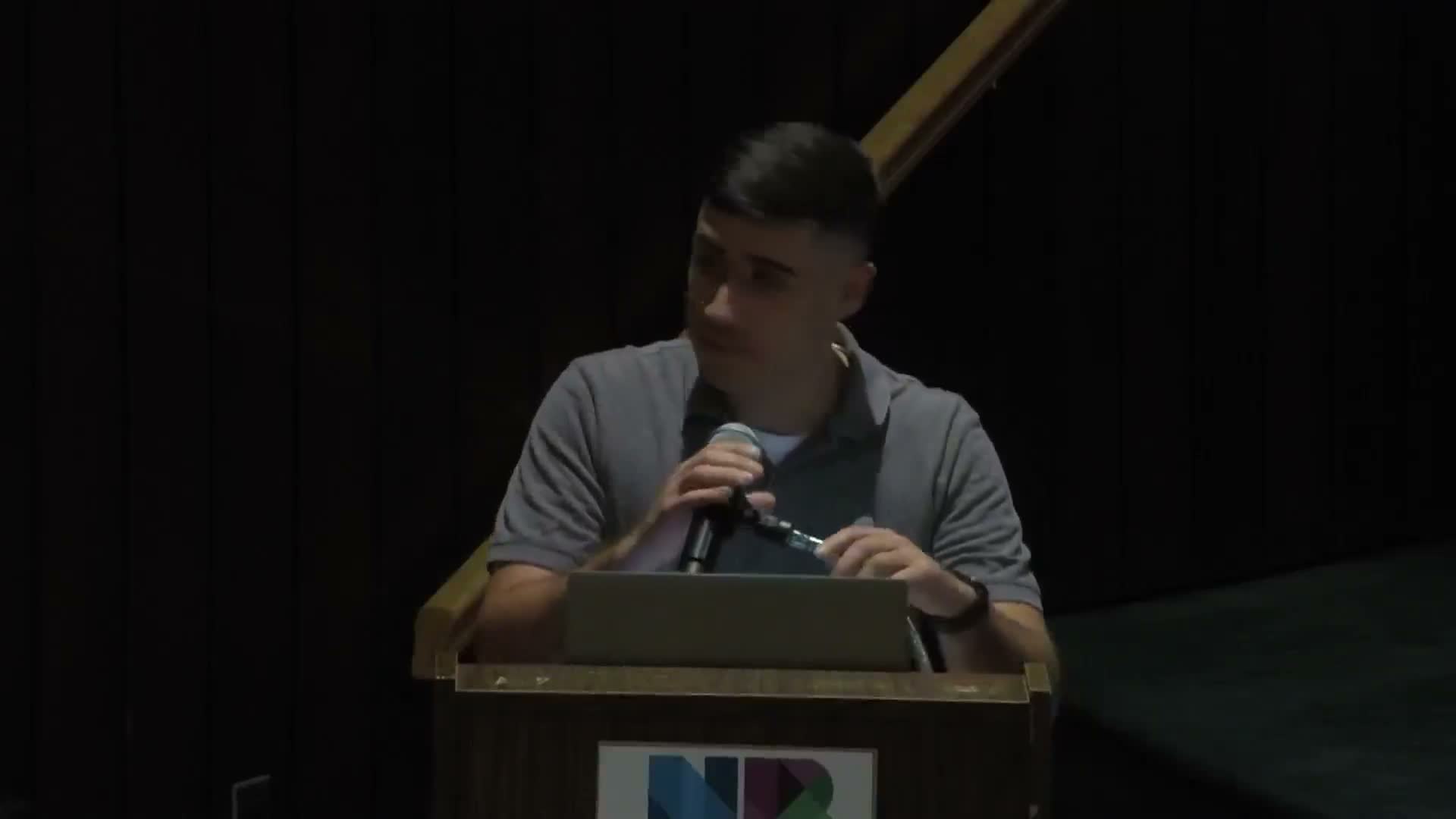
At a Hispanic Heritage Month event at New Rochelle City Hall, local teacher Francisco Andres Sandoval Valencia traced the city's Latino migration history and credited Antonio Valencia with helping to bring the first wave of Mexican immigrants; he noted the 2020 census counts about 27,000 Latinos (roughly 33%).
At a Hispanic Heritage Month event at New Rochelle City Hall, social studies teacher Francisco Andres Sandoval Valencia presented a local history of Latino immigration and singled out one early immigrant, Antonio Valencia, as pivotal in bringing others to the city.
"My name is Francisco Andres Sandoval Valencia," he said as he opened his presentation, describing his upbringing in New Rochelle's West End and his work teaching local history to high school students. Sandoval said the West End, bordering Pelham and north of the Metro-North line, long served as a landing place for successive waves of immigrants, from 19th-century German and Italian arrivals to later Latino entrepreneurs and families.
Sandoval recounted that Antonio Valencia, born in 1922 in the Cotija/La Guadalupe area of Jalisco, traveled to New Rochelle in 1954 after meeting then-mayor George Vergara and his wife in Mexico City. "In 1954, he arrived in New Rochelle and became the first immigrant in the city," Sandoval said, and he added that in 1955 Antonio helped bring a first group of Mexican migrants from his home region.
Sandoval described Antonio's role as "El Padrino," a community connector who helped newcomers find jobs, learn English and navigate housing and legal needs; he also said Antonio worked with unions and local employers and later founded organizations to help immigrants with civil, labor and immigration matters. Sandoval linked Antonio's efforts to a broader economic impact, saying wages earned in New Rochelle supported public works and families both locally and back in Mexico.
Citing census data, Sandoval said, "According to the 2020 census, New Rochelle has over 27,000 Latinos, or about 33% of our population." He urged preservation of immigrant culture and pointed attendees to a public library exhibit and a recorded interview and New York Times coverage for further information.
The presentation closed with a reminder that Latino migration to New Rochelle broadened in the late 1980s and early 1990s to include communities from Guatemala, Colombia, Brazil, El Salvador and Peru, among others. Sandoval encouraged residents to use library resources and local archives to learn more; he noted the public library holds a roughly 40-minute interview with Antonio Valencia and an early 1990s newspaper profile.
The event continued with certificates of recognition and community acknowledgments; Sandoval's talk was presented as a historical sketch intended for a general audience and did not include formal citations beyond the library's exhibit and a New York Times article referenced during the presentation.