Get Full Government Meeting Transcripts, Videos, & Alerts Forever!
Get email alerts on the Retail Display Regulation topic
No spam. Unsubscribe anytime.
Walnut Grove council to draft ordinance limiting public display of psychoactive and age‑restricted products
Summary
Councilmembers agreed to draft a resolution and refine an ordinance to require age‑restricted psychoactive products be kept out of open view — behind opaque covers, locked cases, or otherwise shielded — and to hold a public hearing before any adoption.
A Walnut Grove councilmember urged the council to move forward with new rules restricting how psychoactive and other age‑restricted products are displayed in retail outlets, saying the visible placement of such items normalizes them for children. The council agreed to draft a resolution of intent for the next meeting and to work the ordinance text for a later public hearing.
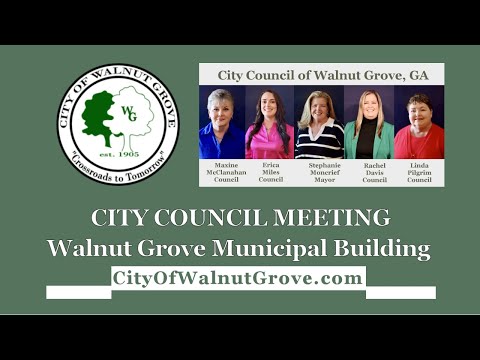
Councilman Davis introduced the proposal after describing how his children pointed out “a plethora of what I would consider highly inappropriate items” on a convenience store counter. “It was very normalized to children who don't have discernment at that point,” he said, arguing for a legal requirement that stores keep those products out of plain view. The draft ordinance in the meeting packet would allow products to be sold but require they be behind opaque covers, in locked display cases, or otherwise not visible at the register.
Supporters on the council said the costs to merchants would likely be small — covering cases or adding opaque panels — and that enforcement could be handled through existing code‑enforcement or licensing channels. Council members and staff raised several drafting questions, including whether common items such as alcohol or coffee would fall under the language and how to define “psychoactive” to avoid litigation. A staff member recommended broader resolution language focused on public safety and youth protection while the city’s attorney conducts a legal review.
The packet notes the city’s authority under state law (cited in the draft as OCGA 36‑30‑3 and 36‑35‑3) to regulate for public health, safety and welfare. Council discussion also touched on window coverage limits in the current sign ordinance (council members said signage generally cannot exceed about 25 percent of a storefront window) and on grandfathering for existing businesses. Council directed staff to prepare a resolution to express the city’s intent at the next regular meeting and to work with the city attorney to prepare the ordinance and a public‑hearing schedule.
The council did not vote on the ordinance itself; members asked staff to advertise the public hearing and return with a refined draft and a recommended timeline. The next procedural step is the council resolution at the upcoming meeting, followed by an advertised public hearing on the ordinance.