
Brentwood planning board advances two housing-related zoning amendments to March ballot
Get AI-powered insights, summaries, and transcripts
Sign Up Free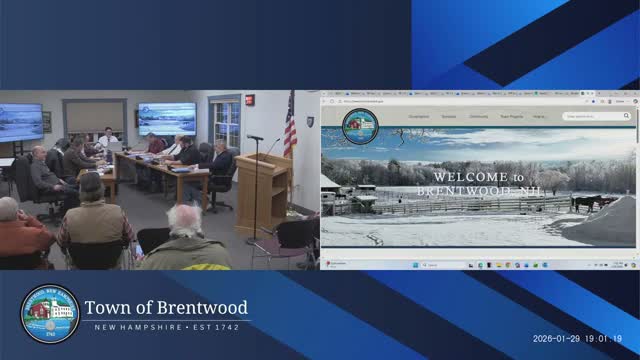
Summary
The Planning Board voted to advance changes to the Commercial‑Industrial district and a separate workforce‑housing ordinance to the March town ballot, citing a 2025 state mandate to allow multifamily in commercial districts and a compromise to preserve local character while meeting state requirements.
The Brentwood Planning Board voted Thursday to send two zoning amendments to the March town ballot: revisions to the Commercial‑Industrial district and a distinct workforce‑housing ordinance. Board members said the changes respond to a 2025 state law requiring towns to allow multifamily housing in commercial districts while trying to retain Brentwood’s rural character.
Board members described the Commercial‑Industrial update as clarifying that multifamily development is not permitted in the Pine Road portion of that district while defining light‑industrial uses for other commercial‑industrial areas. The ordinance requires that 50% of the first‑floor area in certain multifamily buildings be non‑residential space; the board said that requirement and additional site‑review standards would help encourage smaller apartments and mixed‑use development.
The workforce‑housing ordinance was treated as a separate public hearing. Members said they trimmed redundancies (including removing provisions already covered by building codes), limited some workforce provisions to the residential‑agricultural zone, and adjusted density rules. The board cited a compromise cap of six housing units per developable acre, with the possibility of two additional units if those two are affordable under the town’s definition. Board members stressed the workforce category is pegged to Brentwood’s median income and is therefore not equivalent to broadly defined “affordable housing.”
Both motions were advanced to the ballot by voice votes. The board did not make substantive text changes at the meeting, noting state and town deadlines only allow minor editorial corrections before filing ballot language with the town clerk. Members agreed to outreach steps — posters, fact sheets, candidate‑night presentations and office hours — to explain the amendments to voters ahead of March.
Several residents raised technical edits and asked for clearer ballot wording; the board said the statutory ballot question will be supplemented by explanatory handouts and that the full ordinance text will be available to the public. The chair and staff will finalize the statutorily constrained ballot description and deliver it to the town clerk by the required deadline.
Next steps: the amendments will appear on the March ballot; the board will continue public outreach and accept questions through office hours and posted materials.