
Senate committee hears testimony on S.64 to create advanced therapeutic specialty for optometrists
Get AI-powered insights, summaries, and transcripts
Subscribe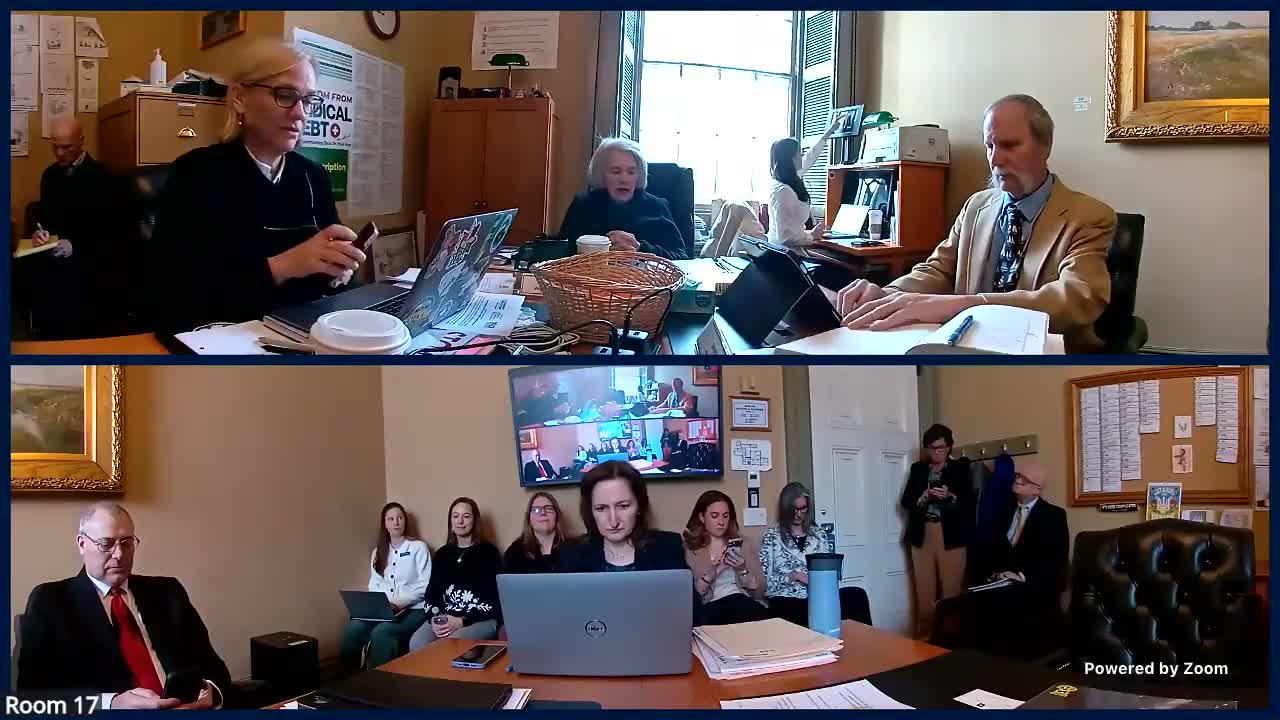
Summary
The Senate Health & Welfare committee opened hearings on S.64, which would add an advanced therapeutic procedure specialty to optometry law, expand certain in‑office laser and injection procedures for trained optometrists, and require specified training, examination and reporting safeguards. OPR and optometry advocates said training and data support the change; senators pressed for clearer oversight and geographic access measures.
The Senate Health & Welfare committee on Jan. 30 began review of S.64, legislation to expand the scope of practice for optometrists by creating an "advanced therapeutic procedure specialty" that would authorize trained optometrists to perform certain laser, injection and other in‑office procedures previously limited to ophthalmologists or other providers.
Jen Harvey, legislative counsel, opened the bill summary, saying the measure amends Title 26 (professions and occupations), adds a new subdivision authorizing an advanced specialty, and lists both permitted advanced procedures and a separate list of expressly prohibited practices. Harvey told the committee that specialty holders would have to meet education, examination and supervised clinical training requirements and that adverse events related to advanced procedures would have to be reported within 30 days.
Nicole, director of the Office of Professional Regulation (OPR), told the panel OPR’s work since 2019 — including a 2020 sunrise report and a deeper 2023 review with public hearings — led the agency to support S.64 while pressing for strong safeguards. "We do support S.64," Nicole said, and OPR urged requirements already in the bill: differentiated education paths for graduates before and after 2019, written and clinical examinations (including those administered by the National Board of Examiners in Optometry), an approved preceptorship, additional continuing education tied to renewal, and outcome and adverse‑event reporting.
Advocates said the change aims primarily to improve access. Dean Barcelo, president of the Vermont Optometric Association, told senators the bill reflects years of stakeholder work and would reduce wait times, lower costs by avoiding redundant hospital procedures, and expand care in rural areas where ophthalmologists are scarce. "S.64 ... allow[s] them to perform some additional in‑office straightforward chairside procedures," Barcelo said, saying Vermont lags 25 states that allow greater optometric practice and that similar language exists in at least 14 states.
Dr. Nate Lighthizer, dean of the NSU Oklahoma College of Optometry, described how U.S. optometry programs train students in classroom, laboratory and supervised clinical settings and outlined a commonly used 32‑hour postgraduate course model for practitioners who graduated before 2019. Lighthizer said 14 states authorize optometrists to perform laser procedures and 21 authorize injections or eyelid procedures. Citing a published compilation of reporting from states that allow lasers, he told the committee the authors reviewed roughly 146,000 procedures with two reported negative outcomes and used that as evidence of a low complaint rate.
Committee members pressed for details about oversight and safe rollout. Senators asked how the preceptorship will be verified, whether out‑of‑state preceptors’ records and litigation history would be reviewed, and how the Office of Professional Regulation would track whether preceptors and trainees actually performed supervised procedures. One senator put the concern bluntly: "Are you really qualified, since you haven't done anything in [this state], to supervise somebody else?" OPR staff said the bill relies on a complaint‑driven enforcement model and pointed to established complaint intake and investigation processes.
The bill includes specific limits: optometrists would remain barred from certain ophthalmic surgeries and most Schedule I/II controlled substances, with a narrowly drawn hydrocodone exception for short courses (the bill text cites a 72‑hour limit). Renewal would remain biennial; specialty holders would add five hours of specialty continuing education per renewal period and maintain any required clinical logs or reporting specified in the rulemaking process.
The committee did not take a vote; the chair closed the session by scheduling additional testimony, including from ophthalmologists, at a follow‑up meeting next week. Committee members asked witnesses and OPR to provide the cited reports, state comparisons and the academic slides referenced during testimony so members can review curriculum and outcome data before markup.
What’s next: The committee will receive further testimony and review rule‑making needs and effective dates before considering amendments or a recommendation. No formal committee action on S.64 occurred during this hearing.