
Milan Area Schools board defends 3.23% offer as parents and staff press for higher pay
Get AI-powered insights, summaries, and transcripts
Subscribe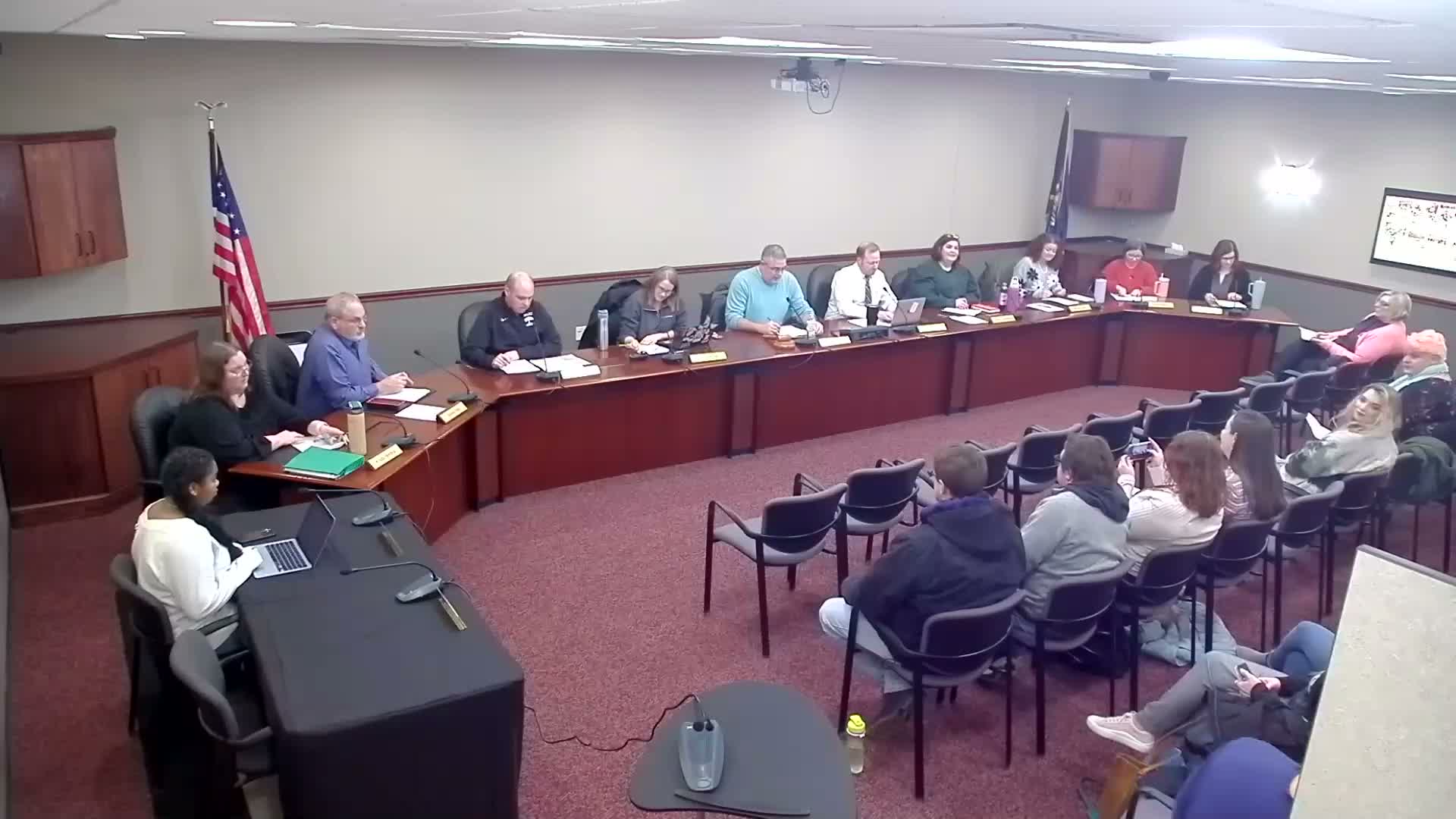
Summary
Board leaders reiterated a 3.23% average teacher salary offer and warned that larger increases could deplete reserves and trigger state intervention; public commenters and MEA representatives pressed for higher pay and highlighted special-education funding and staffing concerns.
The Milan Area Schools Board of Education on Monday defended its most recent salary proposal to teachers while a steady stream of parents and union representatives urged higher pay and better support for paraprofessionals.
In a unified statement read aloud to open board member comments, the board said its most recent offer to the Milan Education Association includes an average salary increase of 3.23% and said that, while it values staff, larger increases could risk the district—s financial stability. "Providing additional pay increase is beyond the district's financial capacity," the statement said, citing a projected fund balance that it said could fall to 1.59% under current projections and noting that a fund balance below 5% can trigger state oversight.
Superintendent McMahon told the board the district has reached tentative agreements with several non-teacher groups, including administrative assistants, paraprofessionals, custodians and transportation staff, based on the same roughly 3.23% average rate; those groups still must ratify the agreements with their memberships. McMahon also described a nonaffiliated staff salary-schedule update, which the board approved on a motion moved by Murray and supported by Burdette. The nonaffiliated schedule generally provides a 3% raise for most positions, 2% for two grant-funded positions, and targeted hourly and administrative market adjustments.
Union and community speakers disputed the sufficiency of the board—s offer. "We deserve to be fairly compensated for the work they do," Jim Russo, who identified himself as president of the Milan Education Association, told the board during the public-comment period. Russo said the MEA contract expired Aug. 15 and that mediation between the union and district is underway; the parties had met once with a mediator and had another session scheduled.
Parents and staff emphasized retention and the human consequences of small-percentage differences in offers. "Point .03% — Should've worked harder," said Christopher West, describing how marginal increases feel to employees who have made financial sacrifices to work in the district. Molly West, a parent, urged the board to "close the gap" to the union—s request and cited a claim that teachers in the district are paid roughly 73.1 cents on the dollar compared with similarly educated counterparts elsewhere.
The board underscored its role as steward of district finances. The unified statement cited fund-balance history: 15.3% at the end of fiscal 2024 and 10.89% at the end of fiscal 2025, with a projected 2.73% for the current fiscal year in the approved budget. The statement also noted that sinking-fund revenue cannot be used for wages and reported sinking-fund receipts of $528,424 to date.
Board members voted unanimously to move into a closed session under section 8(1)(c) of the Michigan Open Meetings Act to discuss negotiation strategy; the board entered closed session at 8:23 p.m., returned at 9:22 p.m., and adjourned immediately thereafter.
What happens next: mediation between the district and the MEA is ongoing; the superintendent said those other groups must ratify tentative agreements before the board can finalize contracts. The board scheduled further discussions and indicated continued engagement with the mediator and MEA representatives.