Get Full Government Meeting Transcripts, Videos, & Alerts Forever!
Tennessee Revenue details consolidated net worth election, warns it is binding for five years
Summary
Tennessee Department of Revenue staff explained who may use the voluntary consolidated net worth election for franchise and excise tax, how the election is calculated and filed (paper or TenTAP), common errors to avoid, and where taxpayers can get help.
Tennessee Department of Revenue staff used a taxpayer-education webinar to walk accountants and business owners through the consolidated net worth election for franchise and excise tax and urged care before electing because the choice is binding for five years.
"It's binding for 5 years," said Cameron Young of the department's audit division, summarizing a key constraint about the voluntary election and the reason taxpayers should model the group's likely net‑worth profile before opting in. The webinar, led by Katie Julian of taxpayer education with presentations from Andrea Fields (registration) and Billy Trout (manager, taxpayer education), ran about an hour and was recorded for the department's webinar library.
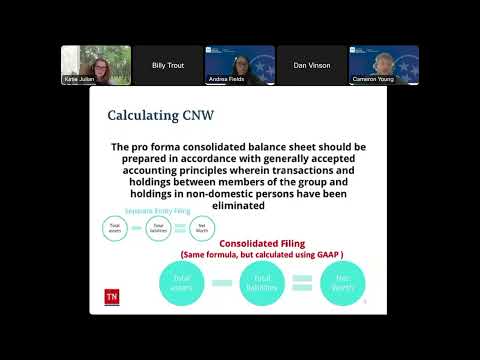
The panel defined the consolidated net worth election as an option that lets affiliated entities compute franchise-tax net worth on a consolidated basis for the net‑worth tax base only, rather than reporting each entity's net worth separately. "A consolidated election is not a combined return," Andrea Fields, a supervisor in registration, clarified, distinguishing the CNW election from unitary or combined filings used by some financial institutions.
How it works: net worth is calculated as total…
Already have an account? Log in
Subscribe to keep reading
Unlock the rest of this article — and every article on Citizen Portal.
- Unlimited articles
- AI-powered breakdowns of topics, speakers, decisions, and budgets
- Instant alerts when your location has a new meeting
- Follow topics and more locations
- 1,000 AI Insights / month, plus AI Chat