
Pecan Plantation residents press Hood County to deny or tighten conditions for Fort Spunky/Pacifico concept plan over water, noise and fire safety concerns
Summary
At a public hearing on the Fort Spunky (Pacifico) concept plan, residents voiced strong opposition to a proposed power/data campus near the Brazos River, citing groundwater depletion, noise from turbines and data‑center fans, lack of fire suppression information for battery energy storage systems, wetlands, and traffic. Developer and power‑partner representatives answered questions but no final vote was recorded.
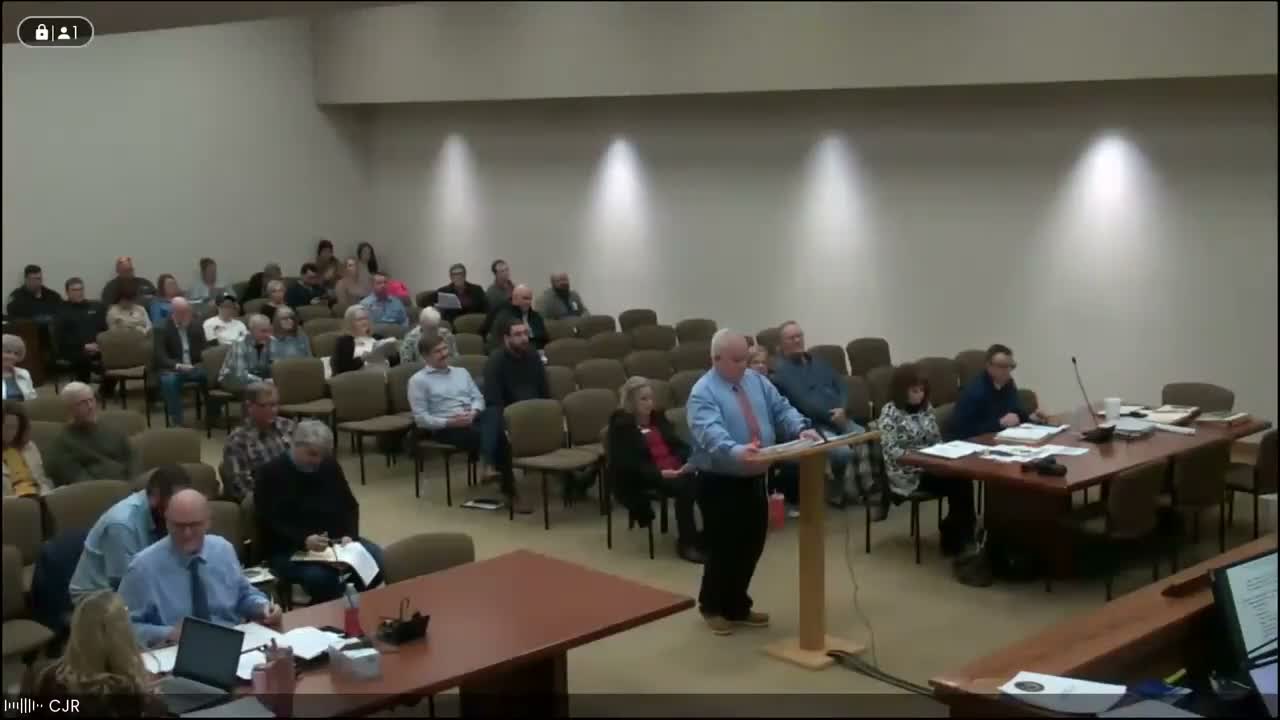
Hundreds of residents from Pecan Plantation and nearby areas attended a public hearing on the Fort Spunky / Pacifico concept plan, expressing concern that the proposed energy campus and paired data center would be sited too close to homes and the Brazos River and that the concept submittal lacks sufficient detail on water, drainage, noise, emergency response and fire protection.
Jonathan Loper, a Pecan Plantation resident, asked if the development is compatible with Hood County, noting the settled residential character and asking whether data centers were appropriate adjacent uses. "Owning land does not create an entitlement to industrial use," Loper said, urging a moratorium while the county evaluates compatibility. Multiple speakers raised groundwater concerns and cited the Upper Trinity aquifer's low recharge; Opportunity Groundwater Conservation District staff explained the monitoring and permit tools available but warned that current levels are stressed.
Kevin Pratt, who presented for Pacifico, said the plan is a concept submission and argued the project team has been coordinating with county staff and that additional studies (drainage, traffic, NFPA‑855 fire protections for BESS, and detailed water sourcing) will follow in later permitting phases. "We believe our concept plan to be complete as a concept plan," Pratt said, while acknowledging many technical items remain to be addressed in follow‑up submissions.
County staff advised that concept plans are an iterative step but noted the county's regulations (e.g., requirement for centralized water and wastewater in water‑quality districts for nonresidential uses) and asked for traffic impact analyses, detailed drainage studies, and documentation showing centralized water/wastewater will be available. Multiple residents and planners asked the court to deny or condition the concept plan until those requirements are satisfied.
No final decision is recorded in the transcript; commissioners and staff requested additional studies and legal review. The matter remains under review and may return for further action following technical submittals and any required agency approvals.

Create a free account
Unlock AI insights & topic search