Lifetime Citizen Portal Access — AI Briefings, Alerts & Unlimited Follows
House Finance Committee Hears Restaurant Industry on Project 10‑14; Implementation, energy costs and tax treatment of prepared food under scrutiny
Loading...
Summary
Representatives of the restaurant industry told the House Finance Committee that Project 10‑14’s tax-rate changes could boost consumer spending but raised major implementation concerns — especially for small operators — around SURI, municipal filings and energy costs. Industry and lawmakers agreed to exchange detailed revenue and employment estimates.
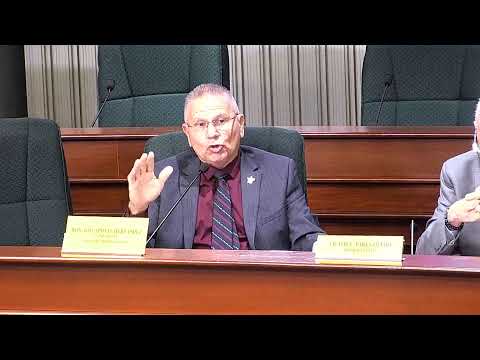
Representatives and restaurant-industry representatives met in a House Finance Committee hearing focused on Project 10‑14, the second phase of a broader tax-reform plan, with testimony centered on proposals to reduce or remove the IVU (sales/use tax) on prepared foods and the costs and operational challenges facing small and medium restaurants.
Industry witnesses told the committee the sector is a major employer and contributor to local spending and urged the legislature to consider both tax relief and companion measures to reduce compliance costs. "Partiendo de que somos el 8.3 de esa venta al detalle," an industry representative said, citing the sector's share of retail sales, and added that the number of restaurants has grown from "alrededor de 4,000" last year to a projected "4,918" by 2026. The representative also called for treating prepared food and supermarket food more equally: "nosotros pedimos la eliminación del IBU ... alimento es alimento." (industry representative)
Why it mattered: Legislators voiced sympathy for the sector but pressed presenters for specifics about revenue impacts and how the government would replace foregone income. Members asked for written estimates; presenters said they would verify figures with their economist and provide the committee with the report link requested during the session.
Key details and debate: Committee members and witnesses debated three linked issues.
1) Tax treatment and fiscal tradeoffs — Presenters argued lowering or removing the IVU on prepared foods would increase consumer spending at restaurants and help vulnerable groups (for example, older residents who cannot cook). Lawmakers repeatedly asked for concrete fiscal estimates. Committee members cited a rough industry estimate that reducing rates could shift roughly $480,000,000 in IVU receipts (number provided during the hearing) and noted a preliminary government estimate of about $500,000,000 in reduced receipts if certain reductions were enacted; presenters said they would supply more precise numbers.
2) Implementation timing and administrative burden — Industry witnesses warned that consolidating municipal and state filings remains a major barrier. Several presenters said SURI and differing municipal procedures create compliance costs for small operators and urged a realistic, staged implementation timetable. "Si no te implanto a tiempo porque no estoy listo, entonces me penalizas" was how one panelist described the risk of a too-rapid rollout (industry representative).
3) Energy and resilience costs — The hearing included detailed exchanges on how restaurants are adapting to power outages. Many restaurants use industrial generators and, where feasible, solar/battery hybrids; witnesses said panels often cannot meet a restaurant’s full load because of roof space constraints at malls and the high energy draw of kitchen equipment. "La resiliencia ha sido nuestro apellido," an industry representative said, describing investments in generators and other equipment to stay open during outages.
Other topics: Members and presenters discussed incentives such as accelerated depreciation for machinery and equipment, which industry witnesses and some lawmakers said could encourage investment in resilience (generators, ovens, refrigeration). Lawmakers also sought clarity on wages and tips; presenters confirmed that a base pay of $10.50 per hour is common and clarified that tips are voluntary and distributed per restaurant policy.
Follow-ups and committee direction: The committee asked industry representatives to share the cited report and the underlying economic estimates. Technicians on the committee agreed to study specific suggestions the witnesses had placed on pages 4–6 of their submission and to coordinate with the presenters on data lists by region to match job vacancies and employers.
The committee recessed following closing remarks; members said they expect to continue follow-up work, including receiving the requested revenue and employment estimates and drafting implementation timelines and technical recommendations for the fiscal oversight process.
Quotes (selected)
"Nosotros pedimos la eliminación del IBU ... alimento es alimento," industry representative.
"Si no te implanto a tiempo porque no estoy listo, entonces me penalizas," industry representative on implementation risk.
"La resiliencia ha sido nuestro apellido," industry representative about investments in generators and other equipment.
What’s next: The committee asked witnesses to submit the report link and additional numeric details; technicians will work with the industry submission and return with staff recommendations and follow-up questions at a later session.