Get Full Government Meeting Transcripts, Videos, & Alerts Forever!
Urbana task force reviews evidence on community responder programs, flags equity and capacity gaps
Summary
At an Urbana Alternative Response Task Force meeting, data analyst Amos Erwin reviewed recent studies and dashboards showing low police-referral and arrest rates for community responder programs, while community members urged planners to address local capacity gaps, equity and service follow‑through. The group set a Feb. 13 deadline for a 97-scenario assignment.
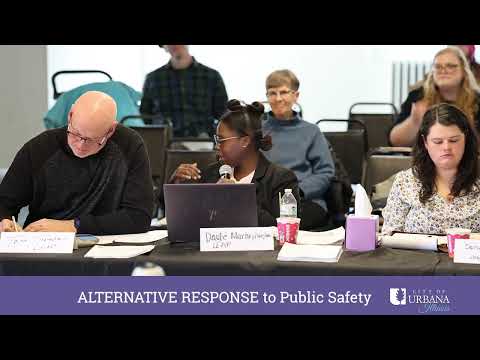
Urbana’s Alternative Response Task Force spent its most recent meeting reviewing what researchers and program dashboards show about community responder programs and debating whether local services can meet demand.
Amos Erwin, a data analyst who joined the meeting by phone, led the presentation, describing a color-coded evidence scheme to help the group interpret findings: green for directly measured indicators (from computer-aided dispatch and responder record systems), dark purple for summary statistics and red for peer-reviewed causal studies. "The CAD systems tend to be very regimented and limited in what can be recorded," Erwin said, adding that responder record-management systems tend to contain more detail about referrals and dispositions.
Erwin told the task force that multiple program dashboards and surveys show promising signals on a few measurable fronts. He cited data indicating referrals from community responders back to police are often around 2…
Already have an account? Log in
Subscribe to keep reading
Unlock the rest of this article — and every article on Citizen Portal.
- Unlimited articles
- AI-powered breakdowns of topics, speakers, decisions, and budgets
- Instant alerts when your location has a new meeting
- Follow topics and more locations
- 1,000 AI Insights / month, plus AI Chat