Get Full Government Meeting Transcripts, Videos, & Alerts Forever!
Get email alerts on the Elected Official Salaries topic
No spam. Unsubscribe anytime.
Council committee hears testimony on bill to create one‑time commission to review elected officials’ pay
Summary
The New York City Council Committee on Governmental Operations heard testimony on Intro. 502, which would create a one‑time, three‑member commission to review elected‑official salaries, set a 60‑day review window and allow retroactive recommendations; advocates urged enforcement fixes to ensure future quadrennial reviews.
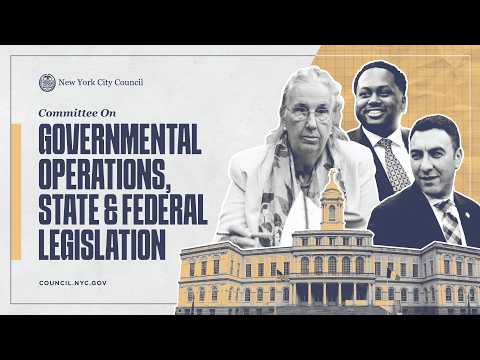
Council Member Gail Brewer, chair of the New York City Council Committee on Governmental Operations, opened a hearing on Intro. 502 on a measure that would require the mayor to appoint a one‑time, three‑member commission to review the salaries of the mayor, public advocate, borough presidents, council members and district attorneys.
Supporters including Ben Weinberg, director of public policy at Citizens Union, told the committee they back the approach as a way to restore an independent review process after a decade without a statutorily required quadrennial commission. "We support this proposed legislation," Weinberg said, while also urging the council to consider a backstop to prevent future mayors from ignoring the requirement.
The bill would give the commission 60 days to prepare a report and would require the commission to recommend whether salary adjustments should be made, including a provision that the commission recommend retroactive adjustments beginning Jan. 1. Weinberg said Citizens Union typically cautions against retroactive pay increases but supported limited retroactivity in this case given the unusual 10‑year lapse since the last adjustment in 2016.
Susan Leonard of Common Cause New York told the committee she opposed retroactive raises and warned that passing a one‑off measure without closing enforcement loopholes risks repeating the same problem. "Retrospective raises are not acceptable anywhere in government," Leonard said, adding that the central problem is mayors failing to convene the quadrennial commission the administrative code requires.
Both witnesses urged the council to add stronger enforcement mechanisms. Weinberg recommended amending the bill or passing companion legislation authorizing another city official—such as the comptroller—to appoint an advisory commission if the mayor fails to do so by the statutory deadline. Chair Brewer said the mayor makes appointments but asked for suggestions on possible appointees and said the committee should consider a practical "stick" to ensure compliance going forward.
A virtual public commenter, Christopher Leon Johnson, opposed the commission and accused an identified staffer of trying to block raises; his remarks included profanity and calls for the mayor’s resignation. The committee did not take a vote at the hearing.
The committee accepted written testimony for 72 hours after the hearing and closed the session after thanking staff and witnesses.