Get Full Government Meeting Transcripts, Videos, & Alerts Forever!
Get email alerts on the County Finance Law Enforcement topic
No spam. Unsubscribe anytime.
Wilson County officials seek details before opening account, signing law-enforcement MOA
Summary
County speakers discussed establishing a dedicated bank account and a memorandum of agreement that would place certain program costs on a law enforcement agency while allowing for possible federal reimbursement; staff said more details and a budget amendment are required before court ratification.
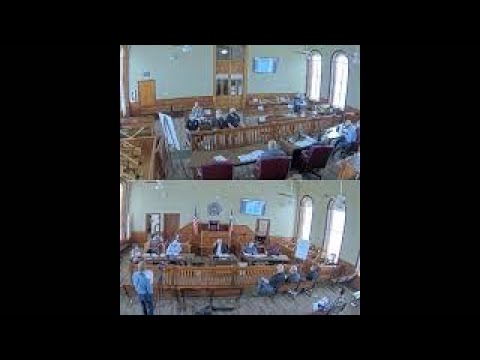
Wilson County speakers spent the meeting reviewing an agenda item to establish a dedicated bank account to hold funds tied to a proposed law-enforcement program and a memorandum of agreement (MOA) that would assign operational duties to a law enforcement agency.
Speaker 1 introduced agenda item 4 as consideration “to establish a bank account except funds generated in section 3 3 79,” and discussion followed about the MOA language and who would bear salary and equipment costs. Speaker 4 said the memo indicates that “a law enforcement agency personnel will carry out designated functions at the LEA expense, including salary, benefits, transportation, and official issue material,” and added that “whether or not the law enforcement agency receives financial reimbursement for such cost through a federal grant or other funding mechanism is not material to this method of MOA.”
Why it matters: the county cannot open or designate an account, or allocate funds for payroll or equipment, until staff can document how money will flow, what reporting is required and whether outside grants require a specific account structure or budget language. Speaker 4 told colleagues they did not have the necessary detail and offered to assemble the information for the court.
Key factual points discussed - Program model and training: Speakers debated which implementation model applied — a “jail enforcement” model (described as requiring more training) versus a law-enforcement model. Speaker 3 said the jail-enforcement model “required a lot more training.” - Funding and per-officer payments: Speaker 3 summarized how the program’s vendor model works in broad terms: “they give a $100,000 for a winner,” and “any officer that certifies to them, that'll be a $7,500 per officer,” with equipment estimated “probably about a $130,000” total cost. - Administrative forms missing details: Speaker 4 said the only form received was an EFT/direct-deposit form addressed to Christina, lacking information about what account type or reporting would be required. - MOA language and infrastructure: The memo the group reviewed states the law enforcement agency covers personnel costs, and that an entity referred to in the memo (transcript: “ICE”) would be responsible for installing IT infrastructure. - Budgetary steps needed: Staff said that if the county intends to use incoming funds for existing employee pay or mileage, a budget amendment would be required to certify state revenue received and identify how funds will be used.
Quotations from the meeting “a law enforcement agency personnel will carry out designated functions at the LEA expense, including salary, benefits, transportation, and official issue material,” Speaker 4 said while summarizing the memo. “They give a $100,000 for a winner. And then any officer that certifies to them, that'll be a $7,500 per officer,” Speaker 3 said when describing the vendor’s payment model.
Next steps and outcome No formal motion or vote was recorded in the transcript. Speakers agreed staff should collect complete program, account and reporting details and return with a package the court can ratify. Speaker 1 said the agreement and supporting documentation must be “presented to that office and brought to us for ratification with the court.” The item therefore remains pending; staff indicated they will prepare account specifics and any necessary budget amendment language for a future meeting.
What’s not specified The transcript does not name the program vendor, the exact statutory citation beyond the spoken “section 3 3 79,” which account type the county would use, or a timetable for court presentation. No vote totals, motions, or named authorizing ordinance or resolution appear in the transcript.