Get Full Government Meeting Transcripts, Videos, & Alerts Forever!
Get email alerts on the Community Priorities topic
No spam. Unsubscribe anytime.
Livingston workshop surfaces top priorities: housing, water and a staffed fire station
Summary
Residents and facilitators at a Livingston City workshop generated and prioritized ideas across infrastructure, housing, safety and recreation; top themes included affordable housing (one recent project drew 'over 600 applications'), expanded water capacity and a fully staffed fire station, while staff will now assess feasibility for budgeting.
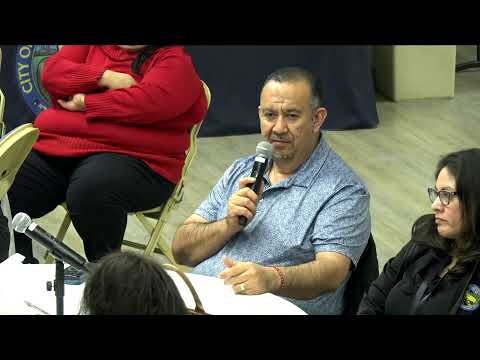
Residents and city officials in Livingston met for a community workshop led by facilitators from Debrief to generate and prioritize local strategic ideas ahead of the city’s upcoming budget process.
The mayor opened the session by calling it an opportunity to align community priorities with city direction, saying, "Good evening, everyone. Welcome, to our, workshop." Facilitators Nancy and Jeanette guided participants through a set of theme boards — infrastructure, economic development, housing and neighborhood stability, community safety and public health, community identity and quality of life, and fiscal responsibility and governance — and asked each attendee to write at least six concrete ideas on sticky notes.
The workshop emphasized actionable proposals. As facilitator Nancy explained, "A strong idea is a concrete action," and participants were asked to phrase ideas as programs, pilot projects or policy changes rather than problem statements.
Groups then consolidated and ranked ideas for impact. A volunteer presenting Group 1’s results said the group ranked affordable housing as its highest-impact need, noting an existing accessory dwelling housing project drew demand: "there, I think, were over 600 applications the last time I checked." Other top items across tables included expanding water capacity and treatment, renovating or adding storm pump infrastructure, and improving retention for public safety personnel through staffing and pay.
Public-safety capacity emerged as a recurring priority. One presenter said the city’s biggest immediate need was "a fully staffed fire station" and described property near the sports complex identified for a future station, adding that federal funds were being pursued to secure it.
Recreation and community-identity projects also placed highly in some groups: finishing the RecPlex center and adding a community water play feature (splash pad) were listed as high-impact items. A resident clarified the splash pad project "is in the plan" and has been discussed with staff. Other suggestions included development standards that preserve green space, student internship partnerships with local colleges, and a clearer online dashboard and notification system to keep residents informed of city projects.
Facilitators and staff stressed that prioritization at the workshop is one input; feasibility and implementation remain staff responsibilities. Nancy said the city will compile the workshop data into a written document and assess feasibility to inform council discussion and upcoming budget decisions before June.
Next steps: staff will produce a comprehensive write-up of all submitted ideas, analyze feasibility (the facilitators characterized feasibility assessment as the staff’s next task), and present findings to the council for budget and planning consideration.