
Victor Central projects multi-million dollar budget gap but aims to avoid layoffs or cuts to student programs
Get AI-powered insights, summaries, and transcripts
Sign Up Free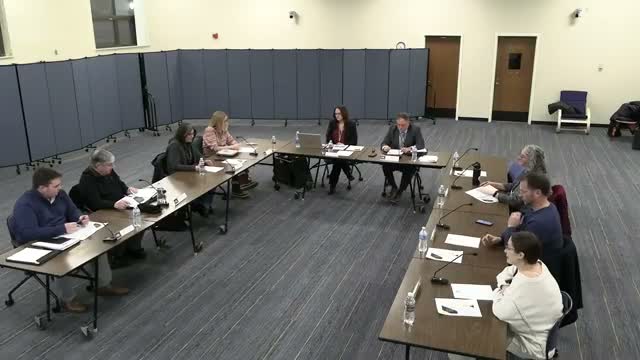
Summary
District leaders told the school board Jan. 29 that preliminary 2026–27 budget math shows a gap of roughly $1.1 million–$3.3 million, but said they expect to preserve programming and staffing by tightening building-level nonpersonnel lines, using reserves cautiously and pursuing state-aid advocacy.
Victor Central School District leaders told the Board of Education on Jan. 29 that preliminary calculations for the 2026–27 budget show a shortfall they estimate between about $1.1 million and $3.3 million, but that they expect to avoid layoffs and reductions in student programming.
"We firmly believe, thanks to Christine's leadership, the board's leadership and the work that we're gonna be doing over the next few months, that we can do this without any reductions in student programming for next year without any layoffs to staff," said the district presenter (speaker 2) during the workshop.
The presentation traced the cause of the pressure to recent years of staffing increases that right-sized the district after years of understaffing and a one-time capital project. District leaders said health care and utility cost growth, combined with only modest projected revenue increases of 3–4%, produce the preliminary budget gap if staffing and nonpersonnel spending remain at current levels.
Christine, the district official presenting building-level budgets, described a districtwide effort to tighten contract, equipment and supplies codes at the building level. "Building leadership really took a deep dive into their expenditure lines, looked at historical trends and multi‑year averages," she said, citing examples such as an estimated 2.9% reduction at the early childhood center and a roughly 7.8% decrease at the primary school in those lines. Overall, the building reductions in equipment, contractual and supplies codes total about a 4.8% decrease.
Board members asked whether those reductions would shift costs to teachers who often buy classroom materials out-of-pocket. "The instructional allocations amongst the teachers within those codes, they did not change those," Christine responded, saying teacher-level allocations retain a cushion and that some library codes were adjusted because of state-aid reductions but could be supported later via budget transfers.
On state aid, district staff said December state-aid output reports show about $611,000 more for the 2025–26 year than originally budgeted, a favorable revision. The governor's initial proposal for 2026–27 in the presenter’s review indicated a roughly 1.26% base increase for Victor, but district leaders said they will advocate for a larger increase (3%–4%) to better cover special-education and other costs.
Officials noted that certain aids are expense-based (for example, BOCES and transportation) and depend on projected spending; building-aid timing also can be affected by when capital project expenditures and debt service are finalized. Christine said federal grants for special-education services are recorded in the special-aid fund and that the district has largely maxed current grant allocations.
The board was also briefed on reserves and cash flow. Staff said the district strategically used about $28 million from reserves for the approved capital project and that current noncapital reserves are comparatively low for a district of its size. The treasurer provides monthly cash-flow statements and the district can draw from its appropriate fund balance if needed; the presenters discussed potential third-party cash-management tools under review.
Next procedural steps include two budget meetings in February, two in March and review/adoption in April; the budget hearing is set for May 5, voter registration May 12 and the budget vote May 19. Finance staff also will send a March 31 purchase-order cutoff memo to help lock in end-of-year estimates.
Votes at a glance: the board approved the meeting agenda, accepted an employee agreement executed Jan. 16, 2026, and adjourned the special meeting earlier in the session; each action was announced as "motion carried" in the transcript.
The board moved from the formal workshop into an informal review of board goals after the presentation, and members were reminded of a legislative breakfast on Feb. 7. The district will continue budget work over the coming months and pursue state‑level advocacy to seek higher foundation‑aid increases.