
Developer outlines 193‑unit project for former Uncle Sam’s lot; board schedules hearing
Get AI-powered insights, summaries, and transcripts
Subscribe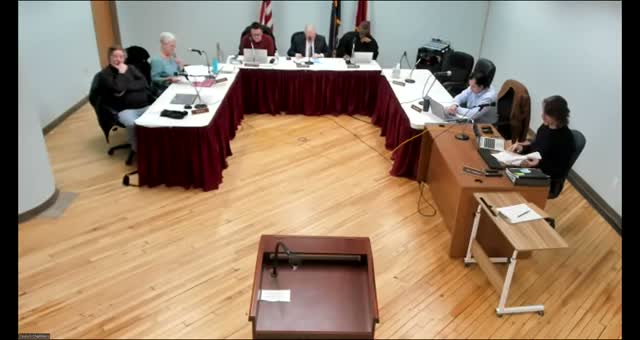
Summary
Applicant presented a five‑story, 193‑unit development at 1525 4th Street and discussed parking, sewer connections, historic‑review comments and EV‑charging requirements; the board declared SEQR/"Seeker" status, sought HRC coordination and scheduled a public hearing for Feb. 17.
The planning board heard another public presentation for a large downtown proposal at 1525 4th Street, the site of the former Uncle Sam’s parking garage. The project team described a five‑story building with 193 residential units, 236 parking spaces (158 standard and 78 compact), indoor long‑term bike storage and outside short‑term racks along Fulton Street, plus second‑floor amenity areas including grills, pickleball courts and community gardens.
Bridal Mergome, the landscape architect for the applicant, told the board the applicant had submitted a lot‑line adjustment and expected to petition for area variances for setbacks and possibly parking. The team said it had submitted materials to the Zoning Board of Appeals for a setback variance and expected to finalize parking‑setback questions after staff and corporation counsel determine whether the parcel is a corner lot for setback purposes.
On infrastructure, staff and board members pressed the applicant on sewer capacity and the project’s need to develop a combined‑sewer offset project that meets the city’s requirements. The applicant said consultants (including CDM Smith) had proposed offset options and that the developer’s engineer would carry the burden of designing an acceptable offset.
Public comments included Michael Coker, an adjacent property owner, who said he supported the project and preferred a developed use to a long‑term empty lot. Steven Maple raised long‑standing concerns about structured parking, conversion readiness of street frontage and conditioning approvals on engineer confirmation of conversion feasibility.
Board actions: the board declared the project a Type 1 SEQR (referred to in the transcript as “Seeker”), issued a negative declaration, and scheduled a public hearing for Feb. 17. Members also agreed to designate two board volunteers to meet informally with HRC and applicant representatives to resolve outstanding historic‑district and architectural issues.
What’s next: The applicant will continue to address staff comments, coordinate with HRC, finalize required variance and offset documentation, and appear at the Feb. 17 hearing with updated materials.