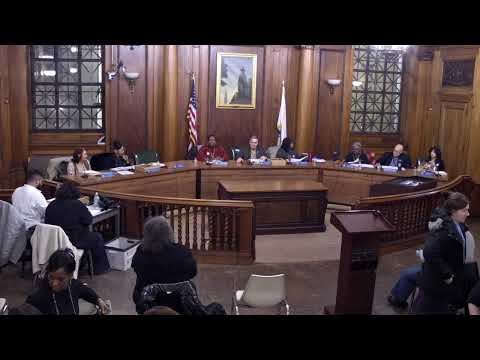
Parents and educators urge Springfield School Committee to address special‑education transportation and classroom safety
Loading...
Summary
Parents and several Springfield special‑education teachers told the school committee that recent transportation changes and understaffed low‑incidence classrooms are creating safety risks; speakers urged the district to honor IEP‑linked transportation decisions, improve staffing, training and communication.
Latasha Monroe, a Springfield parent and IEP advocate, told the committee that recent changes to special‑education transportation intended to improve safety have, in practice, put her children at risk.
"Before this change, the same drivers were already safely picking up and dropping off my children in front of my home," Monroe said, adding that after drivers were instructed not to back up her nonverbal 5‑year‑old daughter and her son were taken to unfamiliar locations without timely parent notification. "When that happens, families are left managing confusion and risk that should not be theirs to manage."
Several district educators corroborated concerns about classroom safety and staffing. Jason Perkins, who said he has taught exceptional learners since 2001, described repeated incidents in substantially separate classrooms that he tied to understaffing and overcrowding: "Many times, we're afraid to take our prep or our lunch or even bathroom break, fearing someone will get hurt if we step away." He outlined injuries to staff, including head butts and broken glasses, and said paraprofessionals need hazard pay and more training.
Migdaria Rivera, an intensive LINCS teacher, cited a recent SEA survey and reported that "90% of the members that answered this survey informed that they have been hurt at work since the start of this school year, with 49 percent reporting behaviors that this behavior happened daily." Rivera listed common behaviors—hitting, scratching, biting, elopement and self‑injury—and urged the district to prioritize safety protocols, crisis response training and support systems.
Olivia Baker, a special‑education teacher at Bold Elementary, described persistent facility problems and staffing gaps that endanger students and staff: mold, holes in ceilings and walls, and lack of substitutes when paraprofessionals are absent. She called for detailed emergency protocols, immediate communication tools (walkie‑talkies) and higher pay for paras who work in dangerous settings.
Riley Hernandez, president of the Springfield Education Association, framed many public comments in labor terms, warning that eight schools returning from the Empowerment Zone and applying for innovation status face contract waivers that were not negotiated with the SEA; he asked the committee to agree that such waivers be subject to collective bargaining in 2028.
The public comments closed with the chair thanking speakers; no district vote or formal action on these public‑comment requests was recorded during the meeting. The most recent district responses in the meeting included the superintendent's later remarks about partnerships and staffing pipelines but no immediate operational changes were announced.
Next steps: speakers asked the school committee to review transportation procedures tied to IEPs, improve communication with families when schedules change, and develop staffing and safety plans for low‑incidence classrooms; the record shows those were raised during public comment but not decided at this meeting.