
District staff recommend raising summer-school pay to $31 an hour to recruit teachers
Summary
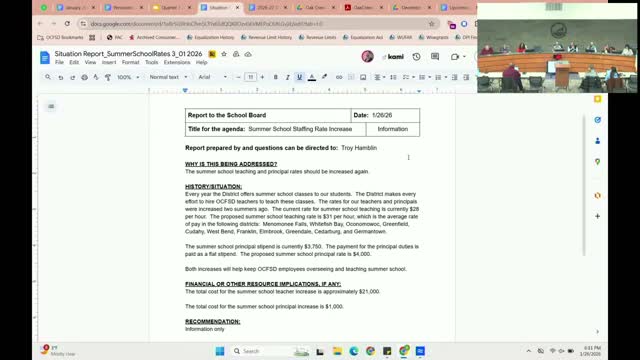
A district presentation on Jan. 26 recommended increasing summer-school hourly pay to an average of $31 to match peer districts and improve recruitment; board members asked about causes, cost tipping points and connections to state aid.
District staff told the Oak Creek-Franklin Joint School District board on Jan. 26 that summer-school hourly pay has fallen behind comparable districts and recommended raising rates to an average of $31 an hour, with modest increases for principals, to attract instructors.
Troy, who presented a recent HR survey, said the district was a few dollars an hour behind neighboring schools and that summer-school staffing has seen annual increases since the pandemic era. Board members asked whether the primary cause was a shortage of teachers generally, low pay, or both. Troy said the upward trend in rates appears widespread and that some courses (for example, PE and certain specialty offerings) are harder to staff.
Administrators told the board summer school offers two benefits that weigh against cost increases: (1) counting students for state aid and (2) providing intervention time for students who need support. One board member cautioned about a possible tipping point when higher pay could make summer programming cost-prohibitive, especially for elementary “enrichment” classes.
No formal vote on the rate change was recorded during the meeting; the agenda change to discuss the item was approved and the topic will be an information item for follow-up. The administration was directed to bring staffing and budget assumptions forward as the district finalizes plans for summer programming.
Context: The presentation was part of a larger set of budget planning items leading into a Feb. 23 meeting where the board will review budget assumptions. The district noted that hiring new teachers who begin in the fall sometimes fill summer assignments, which can ease staffing, but supply remains inconsistent across subjects.
Next steps: The board will review staffing-rate proposals and related budget assumptions at upcoming meetings; no binding pay change was recorded at the Jan. 26 public session.

Create a free account
Unlock AI insights & topic search