Get Full Government Meeting Transcripts, Videos, & Alerts Forever!
Get email alerts on the Housing Development topic
No spam. Unsubscribe anytime.
Selma planning commission tables 237‑lot Lavinia Tract proposal after residents press for workshop
Summary
After residents raised concerns about lot sizes, neighborhood compatibility and notice, the Selma Planning Commission voted 6–1 to table the proposed 237‑lot Lavinia Tract 6514 subdivision and annexation, asking the developer to hold a town‑hall workshop before the commission forwards a recommendation to city council.
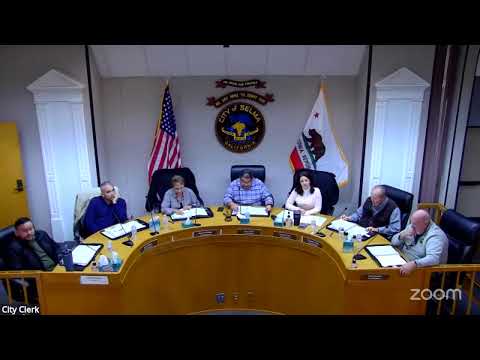
SELMA, Calif. — The Selma Planning Commission on Jan. 26 voted 6–1 to table a proposed 237‑lot subdivision and annexation known as Lavinia Tract 6514, after hours of public comment and commissioners’ questions about lot sizes, neighborhood character and notice.
Staff and the applicant described the project as a mixed‑lot single‑family subdivision with approximately 53 acres of development within an 82‑acre annexation area. Jerome King, the city’s project consultant, told the commission the map proposes lots generally ranging from about 5,000 to 9,000 square feet, two neighborhood parks totaling roughly 4.3 acres, storm‑drain and utility infrastructure, and a pre‑zone to R‑14 (4,000 sq. ft. minimum). King recommended the commission forward approval to the City Council and said staff concluded the project is eligible for an exemption under the California Environmental Quality Act’s Section 15183 because it is consistent with the general plan and an existing programmatic EIR.
“I will recommend approval to City Council of tentative tract map 6514,” King said during the staff presentation.
Members of the public, many from nearby Meridian and Country Rose neighborhoods, urged caution. Joan Nelson, who said she lives at 1058 Mill Street, said residents bought custom homes and worried the new subdivision would reduce their property values and create a traffic thoroughfare through the area.
“We basically call our area the Meridian Subdivision. They were all custom homes … I don’t think it’s fair to them,” Nelson said.
Developer Joseph (Joe) Crown of Crown Homes responded that his company builds “quality and affordability,” noting prior projects in Fowler and Kingsburg and saying the 237 houses will be built over several years. Crown and a contractor’s representative said the plans include upgraded standard solar packages approaching net‑zero for homeowners.
“All of our homes come with quality and affordability,” Crown said. Slade Dieter, a solar consultant testifying on behalf of Freedom Forever, said the project’s standard solar package could eliminate homeowners’ monthly power bills.
Commissioners pressed on several fronts: potential mismatch with surrounding lots, whether the city can require larger minimum lots, and the limits state law places on denying residential projects. Staff cited the Housing Accountability Act and Senate Bill 330, saying local discretion to deny a project is limited when it meets general‑plan density and there are no documented health or safety impacts.
Several commissioners said they sympathize with neighbors who want larger lots. Commissioner Grama Corey said larger lots historically have sold first in Selma and suggested the developer consider some bigger lots to better match the surrounding neighborhood. Crown replied his proposed mix includes larger models and that the smallest lots in his subdivision are 5,000 square feet, not 4,000.
“We have to look at affordability,” Crown said, adding that many buyers can’t afford million‑dollar homes and that his pricing and product mix aim to provide a range for local buyers.
After discussion, a commissioner moved to table the tentative map and rezone until the applicant holds a developer‑led workshop or town hall to show visuals and answer residents’ concerns. The commission approved that motion on roll call: Commissioner Kessler voted no; all other commissioners voted yes (6–1).
The action pauses the commission’s formal recommendation to the City Council; staff said the item would return after the requested community engagement. Staff also reminded commissioners that state law limits the total number of public hearings for residential projects under SB 330 to five, which factors into scheduling further hearings.
What’s next: The developer and staff will coordinate a voluntary workshop or town‑hall meeting for neighbors. If the project returns to the commission, commissioners will consider any changes and make a recommendation to City Council, which would decide on annexation and rezoning before the matter goes to LAFCO for final annexation review.