Get Full Government Meeting Transcripts, Videos, & Alerts Forever!
Get email alerts on the Public Health topic
No spam. Unsubscribe anytime.
Women’s Fund launches SMART campaign urging community action on screens and mental health
Summary
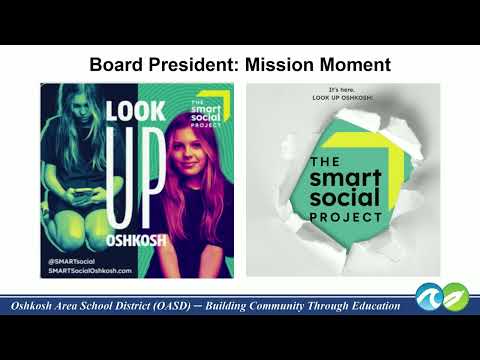
Tanya Harrison of the Women’s Fund told the Oshkosh Area School District Board the SMART campaign links heavy screen and social‑media use with rising anxiety and depression, and will run community events and school partnerships from February through June to promote awareness, tools and offline connection.
Tanya Harrison, a parent and community volunteer with the Women’s Fund of the Oshkosh Area Community Foundation, told the school board on Jan. 28 that the fund has launched SMART, a community campaign aimed at reducing the mental‑health harms linked to heavy screen and social‑media use.
Harrison said the campaign was built on several years of focus‑group work with local mental‑health professionals and national speakers. She summarized five core areas the professionals highlighted as most harmful for brain health—addictive app behaviors, misinformation, sleep disruption, social comparison, and cyberbullying—and said the effort is intended to promote “awareness and intentionality” rather than elimination of devices.
SMART centers on five behavioral pillars—self‑awareness, mindfulness, authenticity, responsibility and truthfulness—and will pair education with resources, tools and community events. Harrison outlined a months‑long community calendar: February will emphasize community “unplug and play” opportunities (pickleball nights, singo, library line dancing, an inflatable obstacle course), March focuses on misinformation with a “truth quest,” April on sleep (tied to National Pajama Day), May on social comparison through an art installation and student engagement, and June on cyberbullying outreach and a citywide movie night.
Harrison said the campaign includes measurement metrics and materials that schools can use. She told board members administrators were briefed and that building leaders and PBIS teams can select components appropriate for their sites; she gave examples of Oshkosh West and North exploring program themes and projects tied to existing student activities.
Board members asked how the schools would implement the work and whether participation would be optional for teachers and students. Harrison said the campaign was designed for the whole community, that district leadership had seen the materials and that the simplest school on‑ramp is sharing resources with families; individual schools may adopt specific themes and junior‑project work.
The district will distribute recorded presentations from national subject‑matter speakers and make community events and printable tools available to families, Harrison said. She acknowledged the campaign was donor‑funded through the Women’s Fund and community contributions and said the effort is intended to be complementary to classroom efforts and mental‑health services rather than a replacement for clinical care.
The board did not take any formal action; the presentation concluded with members thanking Harrison and expressing interest in how the district might incorporate SMART resources into building‑level activities.