Get Full Government Meeting Transcripts, Videos, & Alerts Forever!
Get email alerts on the Residential Addition topic
No spam. Unsubscribe anytime.
Clinton ZBA Grants Conditional Variance for Smith Addition at 38 Story Lane
Summary
The zoning board granted a conditional area variance reducing a side yard setback from 50 to 35 feet to permit a two‑story 800–1,000 sq ft addition with garage at 38 Story Lane. Conditions include screening, downward lighting and no storage in the setback; the board recorded an affirmative vote.
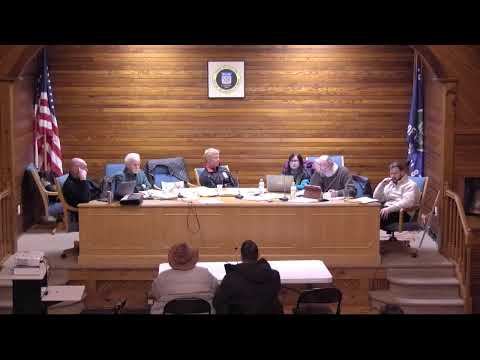
The Town of Clinton Zoning Board of Appeals on Jan. 28 approved a conditional area variance allowing a two‑story addition with an attached garage at 38 Story Lane that will reduce the side‑yard setback from 50 feet to 35 feet.
Tony Amendola of the Amendola Group, representing Kirk and Amanda Smith, told the board the existing lot layout and site constraints make right‑side expansion the only practical option and that the addition, estimated at 800–1,000 square feet, was designed to match the home's scale and character. "The reason for this request is simple. Without the request of relief, the homeowners can't reasonably complete the proposed addition due to the existing layout of the home and site conditions," Amendola said.
The Planning Board reviewed the application on Jan. 21 and issued a positive recommendation. At the ZBA hearing, an adjoining neighbor requested that construction be limited to weekdays; the applicant said he would include a weekday‑work clause in the construction contract if the board desired.
The ZBA imposed three explicit conditions before granting the variance: screening along the driveway side, downward‑directed lighting to avoid spillover, and a reminder that no storage is permitted in the setback area. The board clarified that those lighting and storage restrictions reflect existing zoning and were restated as conditions to make them explicit on the approval.
The motion to grant the variance was made by a board member representing the Planning Board recommendation and seconded by another member; the chair announced the conditional variance had been granted. The applicant thanked the board and left with instructions to include the agreed conditions in contract/site plans.
What's next: The decision allows the Smiths to pursue building permits consistent with the variance and the conditions; permits and any required inspections will be processed by the building department.