
Clinton Zoning Board Debates Major Open‑Space Variance for 70‑Acre Parcel; Motion Being Redrafted
Get AI-powered insights, summaries, and transcripts
Subscribe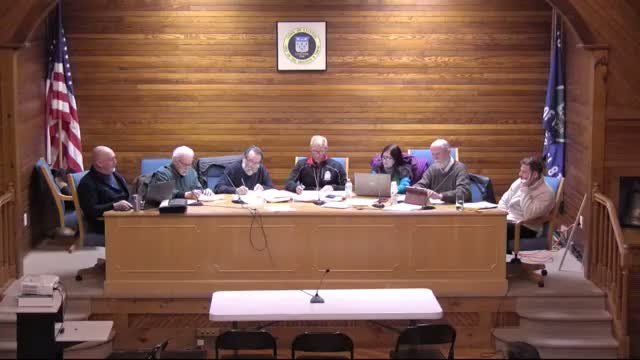
Summary
Owners of a 70‑acre Clinton parcel sought to reduce the town's 40% open‑space requirement (28 acres) to designate 4.8 acres of 'usable' tenant space while keeping the rest in agricultural/forest use; neighbors objected and board members debated a deed‑restriction condition; no final vote — motion being rewritten for a follow‑up meeting.
The Town of Clinton Zoning Board of Appeals spent the bulk of its Jan. 28 meeting debating whether to allow a developer to reduce the town's required open space on a 70.01‑acre parcel that the applicants say they will continue to farm.
Sam Shore, the property owner and applicant, told the board he and his team proposed 12 clustered townhouse units and would set aside 4.8 acres of usable open space for residents while keeping the remaining acreage in agricultural or wooded use. "We're just, the whole point of this was to keep the family farm going," Shore said during the hearing.
The request pits the town's code — which requires 40% of gross lot area as usable open space (28 acres on this site) — against the applicant's plan to retain most of the land in active or managed forestry and to limit resident access to a small lakeside/picnic area. Opponents, including a written letter read into the record by a neighbor, attorney Kevin Magus, argued the applicant has not shown a legally cognizable hardship and that approving the variance would set a damaging precedent. Magus wrote that "the applicant has not documented any bona fide hardship, nor have they identified any truly exceptional or extraordinary circumstances," and urged denial.
Board members and public commenters pressed both sides on technical and legal points. Planning and zoning staff confirmed the parcel's zoning and clarified that, if subdivided, the property would be subject to the town's cluster‑development and master‑planning rules; that discussion prompted debate about whether denying the variance would produce worse outcomes (subdivision with less protected open space) than granting a regulated variance.
A central compromise emerged in board discussion: the applicant would record a deed restriction and site plan language that effectively designates 28 acres as the parcel's open space today but restricts "usable and available" tenant open space to 4.8 acres unless future development occurs. If the owner later sought additional development or subdivision, the deed restriction would require the owner to reserve 40% of the gross lot area as usable open space for that subsequent approval. Multiple board members described that approach as a way to protect long‑term town interests while allowing the owner to keep farming the property now.
Several board members said they were concerned about precedent and enforceability. The planning and legal staff acknowledged that conditions and deed restrictions must be carefully drafted; one member noted that deed restrictions are generally enforceable but can be difficult to police if not clearly worded and recorded.
The hearing included extensive back‑and‑forth about zoning district labels (CR‑1 vs. MR‑1), wetland buffers near a creek on the parcel, and tax/forest‑management implications — all points raised both in letters and during public comment. Neighbors raised potential loss of soils of statewide importance and asked for binding conservation easements or other enforceable protections.
Rather than vote, the board directed staff to redraw the motion and the proposed conditions (including a deed restriction and site plan annotations) and took a brief recess to prepare revised language. The board left the public hearing record open for the drafting process and will take final action at a subsequent meeting.
What happens next: the zoning board will reconvene to consider the revised motion and conditions; if the board votes to grant a conditional variance, the board indicated it will require recorded, enforceable language that ties any future development to the full 40% open‑space requirement.