Ogden planning presents private-street rules, home-occupation changes and downtown chain-business proposal
Loading...
Summary
City planning staff briefed council on a multi-point development code update including: a new minor private-street category for small infill projects, expanded home-occupation allowances (garage/outbuilding use, limited outside employees), a proposed limit on formula-based eat/drink and retail businesses downtown, and revisions to the sign code.
Ogden 'At a Jan. 20 work session, planning staff presented proposed updates to the city's development code intended to support infill housing, small business activity and downtown character.
Private streets and infill: Staff proposed a new "minor private street" standard that would allow up to six lots served by a private street that meets fire apparatus access standards. Maintenance would be secured by a homeowners association or a private road maintenance agreement; larger private-street requests would be considered through a formal modification process with city-engineer and fire-marshal review.
Home occupations: The proposed changes would allow use of garages and outbuildings for home-based businesses, permit one outside employee and allow customers by appointment between 7 a.m. and 9 p.m. The code would limit occasional gatherings (for example, recitals or classes) to small groups (staff suggested up to six students) and would continue to prohibit higher-impact activities such as vehicle repair and boarding animals. Enforcement would be complaint-driven with staff review and existing application procedures.
Formula-based businesses downtown: Council reviewed a draft definition of "formula-based business" aimed at preserving downtown's local and visitor-focused character. Under staff's proposal, a formula-based business would be one with 10 or more U.S. locations that share common branding elements (signage, menus, employee apparel). The draft would apply to eating/drinking and retail establishments and exclude businesses that began in Weber County and later expanded. Staff noted precedents in other cities and said design standards could be an alternative route.
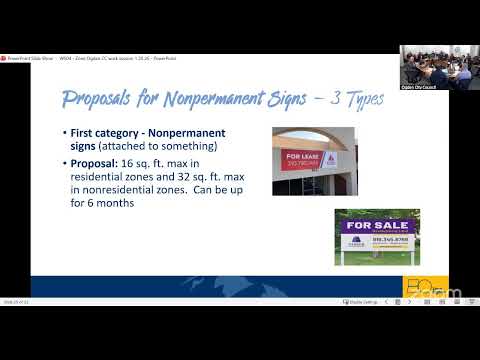
Sign code revisions: Planning proposed clearer, content-neutral sign rules including a recommended maximum freestanding sign height (planning commission suggested 20 feet), time-limited nonpermanent signs (up to six months with permit renewals), daily removal of portable signs, and event-sign allowances (for holidays or special events). The draft would treat political signage under the same neutral rules as commercial signs and would tighten requirements to remove obsolete signs when a business vacates a property.
Council concerns and next steps: Council members raised enforcement questions (how the city would verify appointments vs. drop-in customers), equity concerns for low-income neighborhoods with aging private streets, vacancy and business-support strategies to help entrepreneurs access downtown spaces, and legal enforceability of chain-business limits. Staff said they would refine language, consider design-standard approaches, and coordinate with economic-development staff to support vacancy-use strategies.
Ending: Planning staff will return with draft ordinance language for public review and additional council consideration.