
Yamhill County removes Westsider trail from transport plan after heated debate over farm impacts and grant obligations
Get AI-powered insights, summaries, and transcripts
Subscribe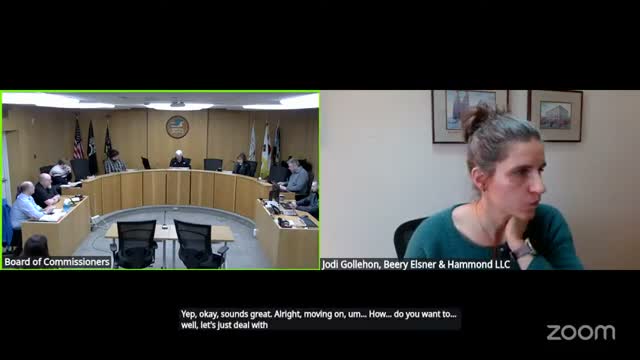
Summary
The Board of Commissioners voted Jan. 29 to remove the Yamhill Westsider (Yamhelas) Trail from the county Transportation System Plan, after extended debate about agricultural impacts, litigation risk and an estimated $1.7 million federal grant repayment obligation.
The Yamhill County Board of Commissioners voted Jan. 29 to remove the Yamhill Westsider (also referenced in the record as "Yamhelas/ Yam Hellas") Trail from the county Transportation System Plan (YCTSP), concluding a multi-hour public and commissioner debate about farm impacts, grant obligations and legal risk.
Chair introduced docket G01-25, a legislative amendment to delete the project from the county’s transportation list. In floor debate commissioners recounted a long history of appeals and remands in state land-use bodies and courts, disputed the county’s capacity to meet grant conditions, and questioned whether the corridor — which crosses productive Exclusive Farm Use (EFU) land — is appropriate for a contiguous bicycle-and-pedestrian trail. The chair described a prior grant obligation and told the board the county faces an approximate $1,700,000 repayment obligation if the project cannot be completed as promised.
Commissioner statements reflected sharply different views. One commissioner said more than 400 people had provided testimony, “over 80%” of whom favored keeping the project in the YCTSP; that commissioner argued for retaining the project on the plan or transferring sections only to public bodies or land trusts that would preserve public access. Another commissioner recounted 12 years of involvement, questioned early outreach and grant assumptions and said he had voted against submitting a prior grant application because he believed the county lacked the financial and staffing capacity to carry the project to completion. That commissioner also cited a county grant application that listed a large total project cost and flagged prior LUBA rulings that forced the county to pay more than $40,000 in opposing landowner attorney fees on earlier appeals.
The record includes staff and commissioner discussion of alternatives to county ownership. Commissioners described early conversations with the city of Carlton about that city taking ownership of the rail segment inside its limits and with the Oregon Department of Transportation (ODOT) about the state taking corridor sections adjacent to Highway 47 in exchange for relieving some or all federal grant obligations. The chair said ODOT indicated it might transfer the value of Carlton’s section to the city if Carlton agrees to build the trail in its jurisdiction, which could relieve county obligations without direct county expenditure.
Board action followed several failed procedural motions. A motion to refer the decision to voters failed, and a later motion to postpone the board’s decision until petitioners had secured a ballot measure also failed. The final motion to approve docket G01-25 — removing the Yamhill Westsider Trail from the YCTSP — passed. The clerk announced the vote: Commissioner Stehr and Commissioner Johnston voted in favor; Commissioner King voted in opposition.
What happens next: staff and county counsel will prepare ordinance language and findings consistent with the board’s motion; commissioners and staff scheduled follow-up discussions to set a first-reading date and to finalize the written findings before formal ordinance adoption.
Quotes taken from the record include: “This topic had over 900 pages of public input,” a commissioner said in urging voter referral; and after the final vote the clerk stated, “Motion passes with a vote in favor by commissioner Stehr and a vote in favor by commissioner Johnston and a vote, in opposition by commissioner King.”
The vote changes the county’s official transportation plan and clears the way for staff to proceed with ordinance drafting and the possibility of negotiating transfers or other agreements with neighboring jurisdictions or state agencies. The transcript also shows continued disagreement among commissioners about process, transparency and whether non-county entities should assume sections of the corridor.