Get Full Government Meeting Transcripts, Videos, & Alerts Forever!
Get email alerts on the Rezoning Public Safety topic
No spam. Unsubscribe anytime.
Horry County committee forwards resolution to study residential rezonings in volunteer-fire and ISO-10 areas
Summary
A committee advanced a resolution calling for review of residential rezonings in parts of Horry County with volunteer-only fire coverage and ISO-10 insurance ratings, citing concerns about response times, recruitment and long-term operating costs.
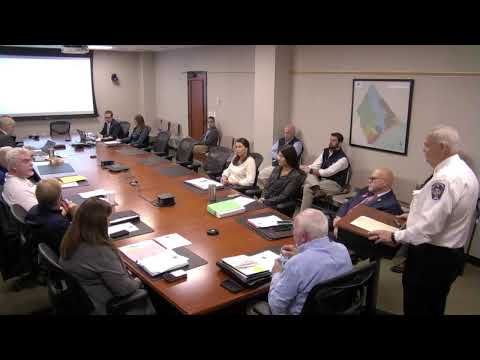
Horry County’s committee voted on Oct. 14 to forward a resolution to the full council asking staff to review limits or additional conditions on residential rezonings in areas served only by volunteer fire stations and parts of the county with ISO-10 insurance ratings. The measure, introduced by Mister Rangel, was moved forward by a committee member and approved by voice vote.
The resolution grew out of concerns that rapid residential growth in the county’s western areas is outpacing emergency response capacity. Mister Rangel told members the county’s 10-year growth plan shows zones where volunteer stations and ISO-10 areas overlap, and he urged caution on rezonings in those areas to avoid creating neighborhoods that may be difficult to insure or serve. "The ISO 10 section is what basically means you may not get insurance at all for your house," he said during committee discussion.
Committee members pressed staff and each other on workforce and budget implications. Rangel and others highlighted recruiting and retention challenges for both fire and law enforcement, noting that building stations is the less costly part of providing service compared with ongoing salaries for career personnel. Rangel estimated annual salary requirements for a fully staffed career station could "be, you know, 1 half million or more," and members said the county must weigh staffing costs when considering dense residential rezonings.
A council member supporting the resolution praised staff forecasting and moved that the committee pass the resolution to the full council; the motion was seconded and approved by voice vote. The chair and members also referenced the local-option sales tax (LOST) as a possible funding source for facilities and operations, saying failure to pass local financing measures would leave taxpayers to cover projects such as new police stations or jail work.
The committee did not adopt a final policy or numeric limit on density; it voted only to forward the resolution for consideration by the full council. Next steps include formal drafting of the resolution language and staff analysis for council review, as well as further discussion at the council's fall retreat, where members said they will address long-term staffing and facility needs more fully.