Get Full Government Meeting Transcripts, Videos, & Alerts Forever!
Get email alerts on the Budget Millage topic
No spam. Unsubscribe anytime.
Council directs staff to craft millage‑reduction plan amid debate over public safety staffing and growing fund balance
Summary
Council asked staff to draft a plan proposing a 1‑mill decrease per year for three years after hearing that FY2025 revenues exceeded budget and unassigned fund balance grew substantially; administrators cautioned recurring personnel costs should be matched with recurring revenue, and public safety leaders urged maintaining staffing.
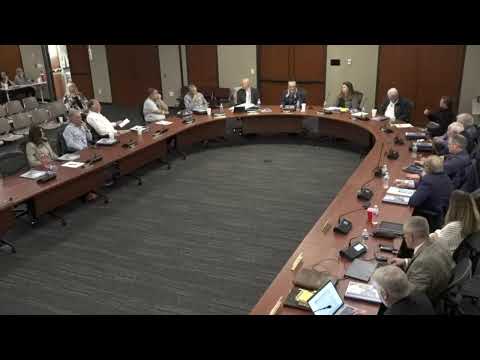
During the fall planning retreat, Horry County Council gave staff direction, by consensus, to develop a plan that would consider reducing county millage by one mill per year over three years, after staff presented unaudited FY2025 results showing revenues above budget and a materially increased unassigned fund balance.
Council member Tyler (identified in the transcript as speaker 13) moved to direct staff to prepare the millage‑reduction plan, arguing that recent revenue gains and a rising fund balance create an opportunity to return money to taxpayers. The council voiced general support and the chair called the vote by voice: the motion passed by consensus with 'aye' responses and no recorded opposition. The direction is nonbinding; it instructs staff to explore mechanisms, timelines and fiscal impacts.
Staff cautioned about matching recurring obligations with recurring revenue. Administrator and finance staff told council the county added roughly $42 million to General Fund balance in FY2025, leaving an ending general fund balance reported as about $202.9 million, and unassigned general fund balance at roughly $69.2 million. Staff emphasized that one‑time fund balance can be used for capital or one‑time items but recommended that any recurring salary or staffing increases be funded with recurring revenue sources.
Public safety needs were raised repeatedly: staff projected a need of about 91 new positions per year to maintain current service levels under the state forecast growth scenario (2.4% annually) and reported roughly 323 current vacancies, with administrators estimating ~60% of vacancies are within public safety functions. The council and staff discussed alternative approaches including increased use of home detention programs, local option sales taxes targeted to public safety, use of tourism‑generated revenue and careful matching of recurring vs. one‑time funding.
Council gave staff the direction to develop the millage‑reduction plan and to return with fiscal analyses, implementation options and recommended guardrails to ensure public safety and staffing needs can be met if reductions are pursued.