Task force recommends hybrid modular shelter; Palm Coast and Flagler County ask nonprofits to respond to RFI
Loading...
Summary
A joint task force recommended a hybrid shelter combining a Putnam-style administration and modular kennels (option 4), citing site constraints at the current Flagler Humane Society and recommending an RFI to find a nonprofit operator and finalize cost-sharing and an interlocal agreement.
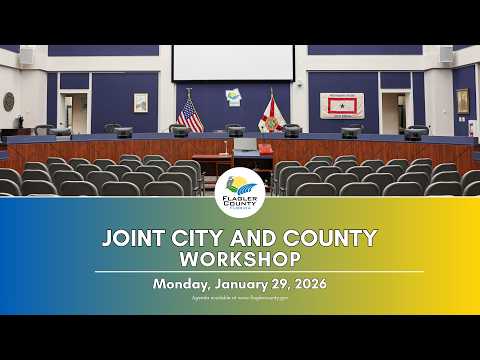
A task force convened by the City of Palm Coast recommended on Jan. 29 that Palm Coast and Flagler County pursue a hybrid animal shelter model that pairs a Putnam-style administration, adoption and veterinary building with prefabricated modular kennels and a modified cattery.
John Zobler, director of community services for the City of Palm Coast, told the joint Flagler County Board of County Commissioners and Palm Coast City Council that an on-site review of the Flagler Humane Society found constraints — including a wellhead, stormwater basin, steep topography and extensive wetlands — that make expansion on the current site infeasible or likely to require costly mitigation. “Extreme mitigation costs make the site infeasible for development,” Zobler said during the presentation.
The task force examined three broad construction scenarios — brick-and-mortar, modular units and the Putnam County model — and recommended “option 4,” a hybrid that uses a main administration/adoption/veterinary building and modular kennels. Task force members said the modular units offer operational efficiencies (indoor–outdoor runs, clip-in automatic feed systems and drains in kennels) while the main building provides indoor veterinary and adoption space. Cameron Orr, who inspected Putnam County’s facility, confirmed that vendor quotes show modular unit lead times of about four months.
The presentation and public comment emphasized cost realism and contingency planning. After visiting Putnam County’s facility, one councilmember said Putnam’s initial $1.5 million figure effectively became closer to $1.9 million once recommended improvements were added. “I would suggest that whatever is budgeted for, the actual cost is 1.9 and then there’s a contingency on top of that,” the speaker said.
Task force next steps include: confirming a site and building type, authorizing staff to finalize a cost-sharing methodology, creating an interlocal agreement for capital and potential operating shortfalls, and issuing a request for information (RFI) to solicit nonprofit operators able to run the shelter. The task force foresees the shelter being operated by a 501(c)(3) while daily functions would resemble municipal animal control. Staff told the boards they will provide refined site analyses, cost estimates tied to specific parcels (public works site, Commerce Boulevard parcel, and Flagler Humane Society on-site mitigation) and RFI materials for nonprofit respondents.
Public commenters, shelter operators and rescue groups urged faster action and described operational design preferences such as indoor–outdoor kennels and built-in drains to reduce labor. Several offered volunteer labor, fundraising assistance and practical advice on value engineering and equipment procurement.
The boards agreed to advance work on option 4 so potential nonprofit operators can evaluate feasibility. Staff will issue an RFI and return with refined cost estimates and site analyses.
The workshop closed by noting next steps and directing staff to produce the RFI and further analysis; the meeting adjourned shortly thereafter.