Get Full Government Meeting Transcripts, Videos, & Alerts Forever!
Get email alerts on the Food Waste Prevention Tracking topic
No spam. Unsubscribe anytime.
MassDEP panel hears food-waste tracking vendors; aims next meetings at donation, infrastructure gaps
Summary
Massachusetts Department of Environmental Protection’s organic subcommittee convened vendors and stakeholders to discuss automated food‑waste tracking, reported reduction results and identified infrastructure, finance and K–12 hurdles; MassDEP will post materials and pursue targeted 2026 sessions on donation and capacity.
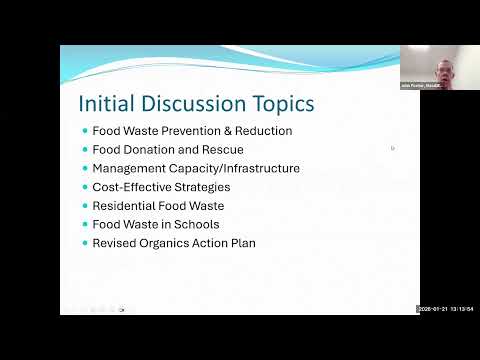
John Fisher of the Massachusetts Department of Environmental Protection opened the organic subcommittee meeting on Jan. 21, saying the session would focus on “the top of the food‑waste reduction hierarchy, food‑waste prevention and tracking systems, and how they can help reduce the amount of food waste that’s being generated in the first place.”
The meeting brought together three practitioners—LeanPath, Winnow and a tabletop/floor‑scale provider represented by Karen—to describe technologies that measure and track food waste, and to discuss barriers, typical results and opportunities for Massachusetts as the agency considers revising its organic action plan and the threshold for the state’s food‑waste disposal ban.
Why it matters: MassDEP is conducting a mid‑course review of its 2030 Solid Waste Master Plan and is weighing changes to the state’s food‑waste disposal ban. Technology and prevention at the source could reduce disposal needs statewide, but MassDEP and participants emphasized that policy changes will require resolving capacity, permitting, financing and stakeholder engagement questions.
What vendors said: Gina Sears of Winnow said the company’s Vision AI system—which pairs a scale and camera with an analytics dashboard—typically yields “anywhere from, I would say, 30 to 70% reduction on average,” measured by the value of food avoided. Steven Finn, vice president of sustainability and public affairs at LeanPath, said his firm generally “cut food waste in half in operations, in about a year,” and that reductions commonly produce food‑purchase cost savings of 2%–6% and financial returns that make the systems cost‑effective.
Karen (company name stated in the meeting transcript) described tabletop and floor models that record weight, photos and timing of served and discarded items, and said operators often prize improved margin and labor savings as much as environmental benefits. Panelists agreed that the business case—reduced food and labor costs and improved margin—remains the most persuasive incentive for many commercial customers.
Barriers and opportunities: Panelists and attendees flagged several obstacles to broader adoption: the operational complexity of busy kitchens (space, labor and process constraints); a conservative pilot mindset in some organizations; lack of internal buy‑in; and integration challenges with point‑of‑sale and enterprise systems. Phil Goddard, speaking from the field, urged the state to consider land, permitting and financing tools and noted a need to understand why roughly “50,000 tons a year of compost capacity” had come offline in recent years.
Public sector and schools: The group discussed K–12 and other public institutions as priority areas but noted constraints (funding, staffing, prepackaged food procurement). Panelists said grant funding can jumpstart pilots that demonstrate value, but sustaining systems after grant periods ends remains a challenge.
Policy levers and consumer engagement: Speakers described policy and incentive models used elsewhere—including South Korea’s pay‑for‑waste system—and encouraged MassDEP to pair regulation and grants with education campaigns for residents and food‑service customers. Several panelists urged a shift in framing from “scraps” to “excess edible food” and stressed tracking both pounds and the monetary value of food saved.
Next steps: Fisher said MassDEP will post the meeting recording and presentation materials on the organic subcommittee webpage, continue stakeholder outreach and tentatively focus the next session on food rescue and donation as part of the food‑waste hierarchy approach.
For now the agency will continue its mid‑course master plan review and said it would work with stakeholders to resolve infrastructure and financing questions before proposing changes to the disposal ban.