Get Full Government Meeting Transcripts, Videos, & Alerts Forever!
Get email alerts on the Medicaid Prepayment Review topic
No spam. Unsubscribe anytime.
Senate committee presses DHS on enhanced Medicaid prepayment reviews after provider payment suspensions
Summary
Lawmakers and DHS officials clashed over the department’s roll‑out of enhanced prepayment reviews for 14 high‑risk Medicaid services, focusing on paused payments, continuity‑of‑care risks for vulnerable Minnesotans and DHS plans for corrective action and vendor oversight.
The Senate Human Services Committee opened a two‑day oversight review of the Minnesota Department of Human Services’ recent implementation of enhanced Medicaid prepayment reviews, focusing on how the new process affected provider cash flow and beneficiary continuity of care.
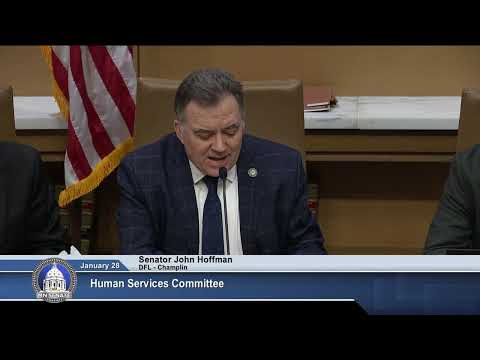
Chair Hoffman said the committee convened to examine "the department's implementation of enhanced Medicaid prepayment reviews and the resulting impacts on providers, service continuity, and Minnesotans who rely on these programs." He framed the hearing as a fact‑finding exercise rooted in the committee’s multi‑year work on program integrity tools and statutory changes.
Commissioner Shereen Gandhi told the committee DHS designated a set of services as high risk and accelerated prepayment reviews per a governor’s executive order. "Without the Medicaid program, Minnesota would be sicker and poorer without this federal‑state partnership," Gandhi said, arguing DHS aimed to protect both beneficiaries and public dollars while identifying fraudulent actors.
Deputy Commissioner John Connolly explained the mechanics: DHS sends claims to a contracted vendor that runs analytics and flags claims as high, medium or low concern; DHS policy teams then review flags and either pay, request additional documentation or refer suspected fraud to the Office of Inspector General (OIG). Connolly said the vendor typically takes about five days to review claims and that DHS expects a biweekly payment rhythm going forward.
Lawmakers pressed DHS on implementation choices and operational impacts. Several members raised the agency’s decision to pause claim processing briefly while MMIS (claims processing) upgrades were completed and initial batches were analyzed, a step DHS described as necessary to apply the new prepayment tests. DHS acknowledged that a one‑time pause and a shifted payment cutoff left many providers unprepared and caused delayed payments for a substantial share of claims.
Committee members repeatedly flagged disruptions to residential and in‑home supports. Commissioner Gandhi said DHS was tracking transitions and had "79 people that have moved from the ICS setting" with about 176 still in process in point‑in‑time snapshots, and she described a "safe transitions" process that coordinates with counties and case managers to avoid service gaps.
On scale and referrals, Gandhi told the committee the agency sent roughly "about 100,000 a cycle" of claims through the prepayment review early runs and that, in this initial phase, DHS had denied payments on some claims but had not yet referred any prepayment‑flagged claims to OIG for fraud prosecutions; she said she expected referrals to increase as analytics were refined.
Members pressed DHS about federal oversight and funding risk after a House opening comment noted CMS was considering a multi‑billion‑dollar withholding. Gandhi confirmed DHS received a CMS letter asserting noncompliance and that the department appealed the action; she said a draft report from the vendor Optum has been delivered to DHS and is under review, and the agency will share public portions once security and audit data classifications are resolved.
The inspector general, James Clark, described DHS’s internal steps before a payment withhold — investigator, supervisor, manager and legal review — and said the office refers suspected crimes to the attorney general's office or federal partners "the very next day after we implement payment withholds." Clark said OIG has conducted extensive recipient interviews as part of investigations.
Lawmakers also raised due‑process concerns for providers that face payment withholds based on "credible allegations of fraud," asking how long a withhold remains in place and what administrative reviews are available. DHS said the corrective action plan it will submit to CMS will include provider training, stronger communications, revalidation site visits and clarified procedures for administrative reviews and good‑cause lifts on payment withholds.
Several members urged DHS to improve provider outreach and notice about calendar changes and cutoff dates after a holiday‑period pause left some providers unpaid for longer than expected; DHS accepted responsibility for communication failures and said it would expand outreach via email, webinars and an advisory panel.
The committee set a second hearing focusing on providers, consumers and families to continue collecting evidence on disruptions and next steps. Chair Hoffman closed by saying the panel will pursue bicameral, bipartisan follow‑up work and adjourned the session.