
Committee reviews S.232 to expand library eligibility for grants, add a 'Library Day' and clarify guidance
Get AI-powered insights, summaries, and transcripts
Subscribe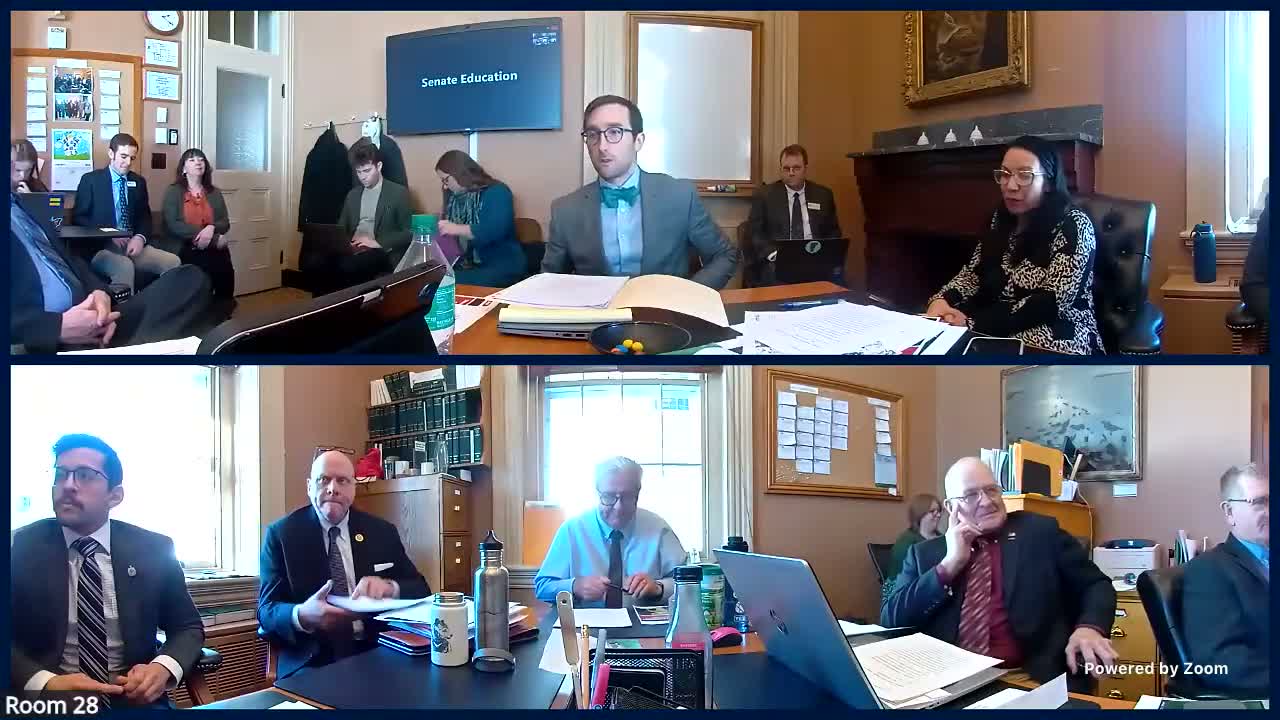
Summary
Legislative counsel walked the Senate Education Committee through S.232 on Jan. 30, which explicitly lists public libraries as eligible recipients for afterschool/summer grants, recognizes a Vermont Library Day, and adds duties for the Department of Libraries to publish grant and bonding guidance; committee members flagged the phrase "reasonable portion" for cannabis-tax allocations and asked for clearer definitions and governance language.
Tucker Anderson, legislative counsel, gave a high-level walk-through of S.232 on Jan. 30, saying the bill mostly clarifies eligibility and adds libraries to lists of eligible recipients for grants and programs. The bill would recognize Vermont Library's Day and add public libraries to the universal afterschool and summer fund's list of eligible recipients. One new sentence would require that a "reasonable portion of funding shall be allocated to the Department of Libraries" to support statewide summer reading and library afterschool grants; Anderson told the committee "there is no standard for what reasonable is" and recommended the committee seek testimony or specify a portion.
State librarian Catherine D'Lau appeared and summarized the department's annual public library survey, noting that 154 of 186 public libraries responded in 2024 and showing trends in in-person visits, circulation and Wi-Fi use. D'Lau urged care in statute language because Vermont's library community includes municipal libraries, incorporated public library corporations and privately chartered library corporations that accept municipal support; she said statutory definitions can trigger governance outcomes the committee may not intend.
Funding, bonding and municipal-plan language: S.232 also requires the Department of Libraries to publish guidance on grants and municipal bonding for library improvements and moves language into grant eligibility that would require municipalities to update municipal plan elements concerning library facilities before applying for certain economic-development grants. Committee members expressed concern that imposing municipal-plan or bylaw update requirements could be burdensome for towns that do not currently have zoning or updated bylaws.
Committee next steps: Members asked legislative counsel and the state librarian to draft clarifying language on the "reasonable portion" allocation, to refine the statutory definition of "public library" to avoid unintended governance consequences, and to consult the advisory afterschool program staff and ACCD on bonding and municipal-plan timing. No votes were held during the hearing.
Where the issues remain: The committee focused on two substantive policy questions: whether and how to set or define a specific share of cannabis-tax revenues for library programs, and how to word a definition of "public library" that preserves flexibility for diverse governance models while ensuring statutory eligibility is clear. Counsel offered to consult with the state librarian and return with suggested language.