Borough, contractor say school remains open while remediation, permanent vapor system planned after Point Higgins diesel spill
Loading...
Summary
Ketchikan Gateway Borough and contractor Nortek Environmental reported removal of contaminated soil and repeated indoor-air monitoring after a late‑August diesel release at a school. Officials say occupied areas currently test well below their action threshold while a permanent vapor barrier and extraction system are planned and out for bid.
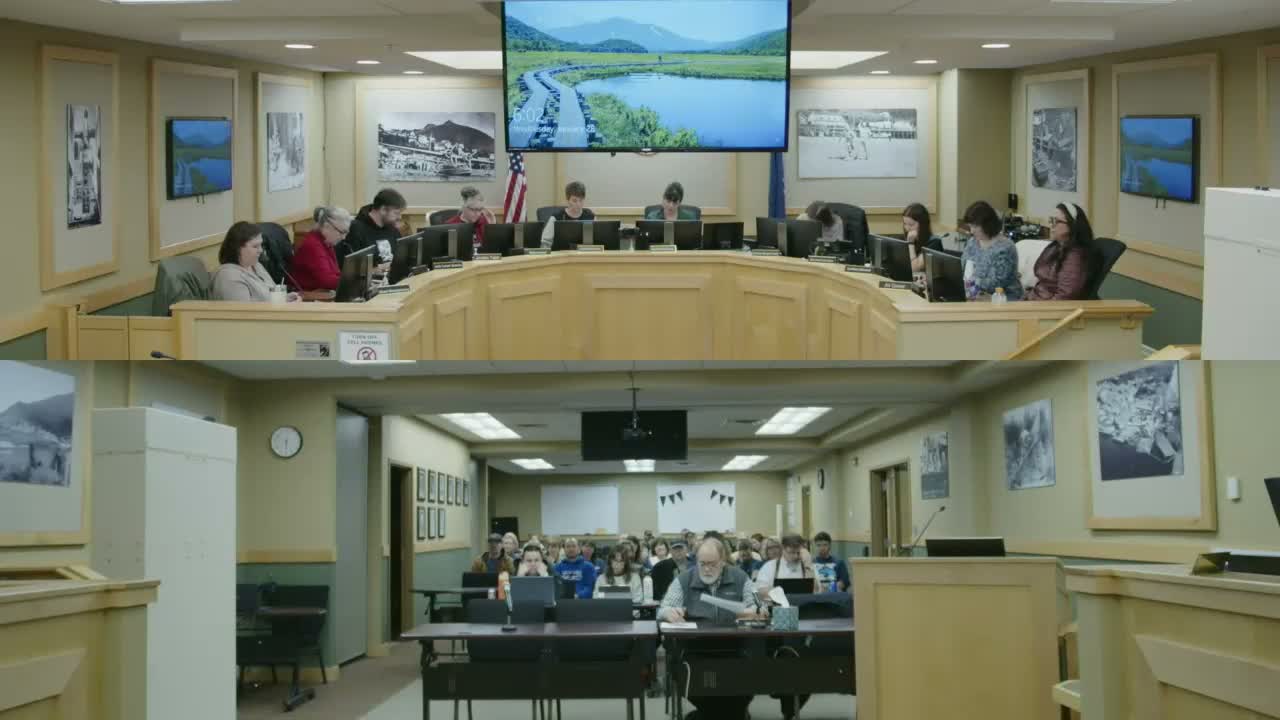
KETCHIKAN — Borough and contractor officials told the Ketchikan Gateway Borough School Board on Jan. 28 that response work to a diesel release near a school in late August 2025 has removed contaminated soil, produced laboratory results, and established plans to reduce vapor intrusion beneath the building.
Morgan Berry, Ketchikan Gateway Borough public works director, introduced Jason Ginter of Nortek Environmental, who described site cleanup and indoor-air monitoring. Ginter said crews "have done a fair amount of work at the school," including removal and offsite shipment of contaminated soils and construction of a temporary fuel-collection pond made of sandbags and an underflow dam to capture diesel that emerges after heavy rains.
Ginter said the team has removed "over 400 cubic yards of contaminated soil" from the collection area north of the school and completed two batches of laboratory sampling for indoor-air contaminants. He said one soils/air report has been available since late September or early October and that a secondary report encompassing the remaining indoor-air assessments was expected "within a few days" of the Jan. 28 meeting.
On indoor air, Ginter described two monitoring approaches: sensitive screening in occupied spaces that reads in parts per billion, and higher-range photoionization detectors (PIDs) for spill‑affected areas under the building. He reported that readings in occupied portions of the school generally fell in the 200–800 parts‑per‑billion range and emphasized that "our action level for determining if something needs more assessment, when it comes to the occupied space, indoor air quality is 5 parts per million," which he equated to 5,000 parts‑per‑billion. He added that the Alaska Department of Environmental Conservation and the Department of Health reviewed the data and determined that, so long as those numbers remain stable, "the school is safe to occupy."
Ginter said crews had installed a temporary ventilation system beneath the gym and in storage/crawl spaces to vent vapors and that occasional elevated readings tied to ventilation interruptions or maintenance activities were followed by repeated monitoring and remediation. He described a plan, developed in consultation with DEC, to install a more permanent vapor barrier (a geotextile layer with a robust vapor membrane on top) in the water-storage and south storage rooms under the gym, plus a vapor-extraction system with fans and ducting to pull vapors from beneath the barrier and vent them outside. After installation, he said, the team will run system tests and conduct another round of indoor-air monitoring and laboratory sampling, then file reports with DEC.
Berry said procurement for the permanent vapor‑barrier and extraction work had been widely distributed to contractors and said, "We anticipate opening those quotes, I believe, next Friday," with a roughly 60‑day work period afterward and an expectation projects would be finished around March. Both borough staff and Nortek emphasized that they were working closely with state agencies to provide the data DEC and the Department of Health need to verify system performance and long‑term safety.
Board members pressed for specifics about barrier materials and retention of earlier containment layers; borough staff said the plan is to leave existing containment in place and build the more robust layers on top to avoid re‑exposing encapsulated materials. Officials also described steps the district has taken inside the school — seam sealing, temporary ventilation, and an incident tracking form with QR codes so staff can report health and odor concerns for timestamped follow‑up.
Next procedural steps include opening contractor quotes, installing the permanent vapor barrier and extraction equipment, independent laboratory sampling and reporting to DEC, and continued indoor monitoring until readings demonstrate long‑term stability.