ASCLAD presenter urges forensic labs to make 'quality' a culture, not just accreditation
Loading...
Summary
In an ASCLAD webinar, presenter Erin Forry urged forensic laboratories to adopt a culture of quality that goes beyond meeting accreditation checklists, highlighting ISO/OSAC standards, practical staffing and training steps, and ASCLAD resources including a mentoring program for five labs.
Erin Forry, an ASCLAD board member and the organization’s president-elect, told attendees at an ASCLAD "Train the Director" webinar that accreditation is an important part of laboratory oversight but not a substitute for a quality-driven culture. "Quality is actually a mindset," Forry said, arguing that laboratories must move beyond viewing accreditation as a box-checking exercise to embedding quality in everyday decisions.
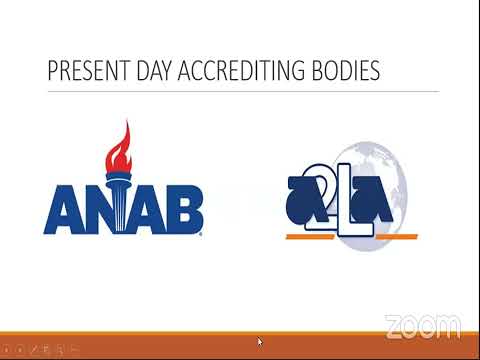
Forry reviewed the history of U.S. forensic accreditation, noting the creation of the ASCLAD Laboratory Accreditation Board in the early 1980s and later developments such as requirements tied to the DNA Identification Act that led many labs to seek conformity with quality standards to access the NDIS database. She described the role of accrediting bodies (ANAB, A2LA) and international standards (ISO/IEC 17025 and 17020) as frameworks used to assess laboratory competence, while cautioning that "Does being accredited mean that you're error free? Absolutely not," and that accreditation reduces—but does not eliminate—the likelihood of error through required corrective actions and surveillance.
On practical steps, Forry recommended hiring for character and quality orientation, appointing a dedicated quality manager, creating cross‑functional quality improvement teams, and training staff to participate in assessments. She emphasized transparency and continuous improvement: sharing nonconformance findings as opportunities to improve processes rather than punish individuals.
Forry also outlined the standards landscape: the Organization of Scientific Area Committees (OSAC), which coordinates standards work with NIST, compiles a registry of consensus standards; standards development organizations (ASTM, ASB) publish standards; and ISO’s Technical Committee 272 develops international forensic standards. She highlighted ISO 18385 (published 2016) as a response to DNA consumable contamination and described the ongoing ISO 21043 series (forensic process parts 1–5), with work on analysis, interpretation and reporting continuing through planned comment rounds.
To help laboratories implement standards, Forry said ASCLAD is developing an Accreditation Initiative toolkit (with RTI) that will include manuals, training links and other resources, and that a mentoring program is currently assisting five laboratories preparing for accreditation. She urged practitioners to complete impact surveys when OSAC posts proposed standards so the community’s views inform whether a standard should be placed on the registry.
Chris Dieters, a member of ASCLAD’s Training and Education Committee who moderated the Q&A, asked participants about hiring and engagement; questions from attendees addressed topics including whether 17025 is a quality management system (Forry said it is a conformity-assessment standard frequently used as the foundation for a QMS), how to shift from accreditation-focused practices to quality-focused management, and the ongoing resource demands of maintaining accreditation. Forry recommended encouraging dialogue about quality across staff levels and allowing analysts to participate in assessments and trainings.
The webinar recording and a PDF of the slides will be archived and made available on the organizer’s website; organizers also asked attendees to complete a short feedback survey. ASCLAD announced the next webinar in the series will cover genetic genealogy on Jan. 23.