Get Full Government Meeting Transcripts, Videos, & Alerts Forever!
Get email alerts on the Restraint Safety topic
No spam. Unsubscribe anytime.
Medical examiner cautions against overuse of 'excited delirium' label, warns restraint risks and outlines autopsy best practices
Summary
An unnamed medical examiner traced 'excited delirium' cases to historical stimulant bingeing, said the term has been abused, warned that restraint—especially prone positioning—can cause asphyxia in obese patients, and urged detailed autopsy steps including scalp examination, hair preservation and comprehensive toxicology.
An unnamed medical examiner told attendees that the term "excited delirium" has a long history but is often misapplied and that restraint poses clear physiologic risks that examiners and law-enforcement agencies must recognize. "I it it is my opinion that this is a personal opinion that the terms has been abused," the presenter said, adding that stimulant drugs (cocaine, amphetamines, PCP, cathinones) can produce a catecholamine surge that raises heart rate, contractility and oxygen demand and may precipitate sudden cardiovascular collapse.
The presenter described cases in which restrained individuals who had appeared calm afterward later died without further physical struggle, and he said those deaths can reflect underlying cardiovascular events triggered by the earlier physiologic stress: "there are multiple cases that they die, while they are quiet...and then all of the sudden they die without anybody touching them."
He emphasized the mechanical danger of placing an adult face down, particularly for people with obesity. Using a comparative example, he noted John F. Kennedy's reported stature while pointing out many adults now weigh substantially more: "Imagine if you put that person face down and then you put on top of that 2 or 3 people who are 200 pounds themselves. What do you think is going to happen?" The presenter explained that prone positioning increases abdominal pressure on the diaphragm and can impede breathing.
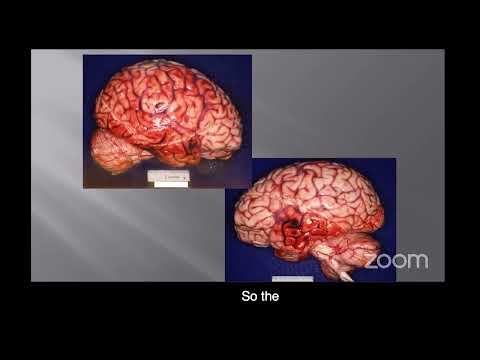
Turning to autopsy technique, he urged examiners to go "above and beyond" when external head trauma is suspected: palpate the scalp, shave and preserve hair in labeled zip-top bags, and coordinate with funeral directors. He recommended dissections to evaluate whether handcuffing compromised blood vessels and a comprehensive toxicology panel and special dissections to resolve competing explanations for death.
The presenter used a 1992 Detroit detention death to illustrate complexity: a case with at least 14 separate head lacerations but limited intracranial swelling and no skull fractures, where some experts favored homicide and others cited cocaine toxicity or undetermined manners. He advocated that careful documentation and expanded postmortem testing are necessary to clarify cause and manner.