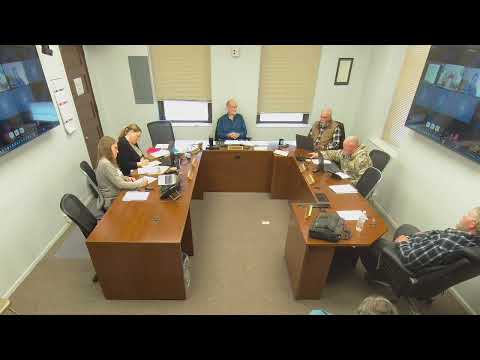
Marion County commissioners map out year of planning on roads, housing, purchasing policy and economic development
Loading...
Summary
Commissioners spent the Jan. 3 meeting developing a workplan for February–April that emphasizes road planning, capital/equipment schedules, purchasing-policy updates, housing incentives and partnerships with schools and neighboring counties to spur local recruitment and business growth.
Marion County commissioners devoted the bulk of their Jan. 3 meeting to setting priorities for a sustained planning effort that will include road planning, capital and equipment budgeting, a review of purchasing and other policies, and outreach to partner cities and neighboring counties on economic development.
Speaker 1 said the commission should begin with road planning in February and follow with capital-equipment planning and a focused run at policy review: "So February, potentially road road work planning... I do have capital planning and equipment, potentially serving the vision of department heads," the speaker said. Speaker 2 urged that the county examine and update its purchasing policy, noting a recent reference to Harvey County's purchasing policy as an example to follow.
Housing and workforce retention were recurring themes. Commissioners said lack of housing limits recruitment and suggested incentives and partnerships with cities and school programs to retain young workers. Speaker 7 predicted a near-term housing gain in one town: "By the end of the end of this year, I think we should have 40 new addresses in Hillsborough." The group discussed partnering with local vocational programs and businesses to create apprenticeship opportunities and keep young people in-county.
On economic development, commissioners discussed cooperation between cities and townships, shared regional pursuit of grant funding, and pragmatic incentive models rather than direct competition. Speaker 7 emphasized partnership over competition and encouraged the county to pursue smaller, achievable projects that can build momentum.
Technology and staffing came up as operational levers. Commissioners discussed using technology, including limited AI applications, to improve efficiency without adding payroll. Noting risk, Speaker 5 cautioned: "You need to be real careful about AI. It's too it's too new." Speaker 7 explained a fleet funding structure for vehicles as a lease-equity approach: "The thousand dollars per vehicle isn't like your typical lease. It is a lease equity payment. So you're going to wind up owning the vehicle at some point, and you retain the equity of that vehicle." Commissioners said such models may allow retention of county assets while spreading costs.
What’s next: staff were asked to prepare multi-year financial comparisons on property-tax and insurance payments, schedule a February road-planning session, and begin targeted work on the comprehensive plan in March–April so the county can align capital, policy and strategic initiatives.
Attributions use the speaker labels provided in the transcript (for example, "Speaker 1").