Subcommittee sends bill to require agency rule filings under Administrative Procedures Act to full committee
Loading...
Summary
A Governmental Affairs subcommittee voted to send HB 903 to the full committee after lawmakers debated how a recent Georgia Supreme Court decision changes agency rulemaking and whether placing agencies under the Administrative Procedures Act will affect prompt agency action.
Representative Powell presented HB 903 to the Governmental Affairs subcommittee on State and Local Government, saying the bill would "put all state departments, agencies, boards, [and] authorities under the Administrative Procedures Act" so the General Assembly would be informed when agencies adopt rules that have the effect of law. He told the panel the measure would not automatically stop agencies from doing their work but would increase legislative awareness and oversight.
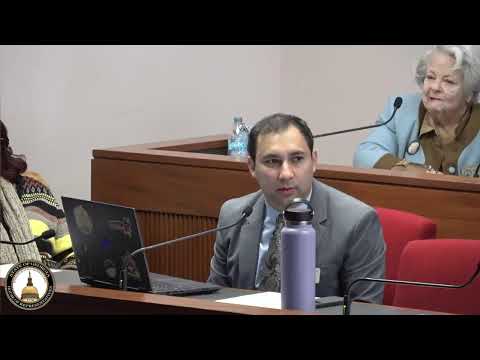
Stewart, counsel to the committee, told members the Georgia Supreme Court’s recent decision in the Internal Vigilance case overturned the earlier DOT v. Atlanta precedent and set a three‑step test for reviewing whether the legislature had properly delegated authority to an executive agency. Stewart described the practical effect: some agency rules will remain allowable when they implement statutory mandates within objective, judicially enforceable guidelines, while other rules that effectively create new law without a statutory basis could be invalidated. Stewart used the state election board’s drop‑box rules as examples — saying the court upheld a drop‑box surveillance rule where statute authorized drop boxes and their supervision but rejected a requirement that drop‑box users show identification because "state law there is no statutory law requiring individuals to present identification when they use a drop box."
Members asked how HB 903 would work in practice. Representative Mary Margaret Oliver said she supported the bill, citing her experience as an administrative hearing officer and calling the APA process "quasi judicial" and useful for transparency. Representative Sanchez asked whether bringing many boards under the APA could slow boards that must act quickly on complex or individual cases; Powell replied the bill creates a reporting and oversight path to the legislature but would not prevent agencies from acting in the short term and gave a motor‑vehicle licensing example to illustrate how agency rule changes can have broad unintended effects.
Chairman Anderson moved that the subcommittee "pass and proceed" HB 903 to the full committee; the motion was seconded and adopted on a voice vote. The subcommittee did not take roll‑call votes or record a legislator‑by‑legislator tally in the transcript. The bill will next appear before the full committee for further consideration.