Get Full Government Meeting Transcripts, Videos, & Alerts Forever!
Get email alerts on the Tax Court Budget topic
No spam. Unsubscribe anytime.
Georgia Tax Court chief judge seeks startup funding in amended FY26 budget
Summary
Frank O'Connell, the incoming chief judge of the Georgia Tax Court, asked the Appropriations Judicial Committee to approve amended FY26 startup funds including $91,560 for personal services, operations and contract pools, and $100,000 in one-time startup costs; AOC staff said some costs may be lower if the court uses existing judicial systems and space.
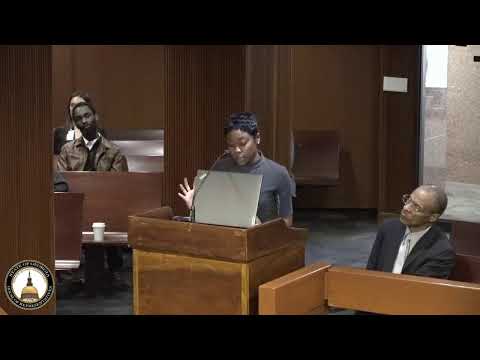
Frank O'Connell, the governor-nominated and General Assembly-confirmed first chief judge of the Georgia Tax Court, told the Appropriations Judicial Committee that the amended FY26 budget includes startup costs for the court to begin operations on April 1, 2026. "This budget request therefore provides for the initial funding, including startup costs, for the tax court for the April 2026 period," O'Connell said during his presentation.
O'Connell cited the specific line items he submitted: $91,560 for personal services (effective April 1 under statute authorization), $42,000 for operations (including rent), $110,000 for contracts (case-management work and staff-attorney support) and $100,000 in one-time startup costs for furniture and computers. He said some estimates were developed months earlier and that subsequent discussions with Administrative Office of the Courts (AOC) staff and judges produced opportunities to reduce costs.
Andrew Zall, budget director with the AOC, told the committee that the $42,000 operations line originally included about $20,000 earmarked for rent and that the amended budget may not require that rental amount. AOC staff also said adding the tax court to the judicial branch's case-management system could substantially reduce the contracts line if the court can use the system now under development.
O'Connell said he had discussed staffing with the sitting tax tribunal and superior-court judges and that a shared staff-attorney arrangement could ease the transition and reduce the immediate fiscal need; he also said some furniture and equipment may be reused from existing offices. "I support the governor's recommendation, and I'm happy to answer any questions," O'Connell told the committee.
Committee members sought confirmations of the updated figures before finalizing the amended budget. Chairman Gullett said he expected follow-up with AOC and agency staff to confirm how much of the contracts pool will be needed and what rent, if any, will remain in the amended FY26 request. The committee did not take a vote at the hearing and directed staff to supply clarifying figures before the next meeting.