Get Full Government Meeting Transcripts, Videos, & Alerts Forever!
Get email alerts on the Department Of Agriculture topic
No spam. Unsubscribe anytime.
Georgia agriculture chief seeks funds for inspections, software and USDA block grant distribution
Summary
Commissioner Tyler Harper told the appropriations subcommittee the Department of Agriculture needs more staff, updated software, and operating funds to manage licensing and emergency responses; he said the department is "ready" to distribute a $531,000,000 USDA block grant but is awaiting USDA finalization.
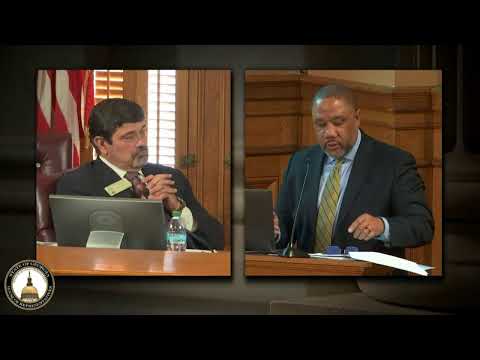
Commissioner Tyler Harper of the Georgia Department of Agriculture told the House Appropriations Subcommittee on Economic Development that his agency needs additional resources to keep up with licensing, inspections and emergency response demands.
Harper said the department now oversees "22 different divisions" and "88,000 licensed entities," and that staff increases have not kept pace: "We've only increased our employment by about 12% in that same time period," he said, adding this produces an estimated 15% increase in workload per employee. He emphasized meat and food-safety inspection gaps, saying some federal cuts have reduced capacity and that the agency "lose[s] meat inspectors to federal agencies."
The commissioner said the department is preparing to distribute a large USDA block grant tied to recent disaster relief and told the panel, "We're ready... to get that $531,000,000 out the door," but that final steps remain in USDA's control. Harper also reported disease-response activity, noting a recent second confirmed case of highly pathogenic avian influenza in Walker County and ongoing multiagency response work.
Harper outlined one-time and continuing budget asks that the governor included or supported: new food-safety software funding, a $1 million-plus governor-proposed allocation for software modernization, a one-time $2,000 employee supplement, and $450,000 for laptop replacement. He also described the Farmland Conservation Fund application process and the department's role in pass-through funding to administratively attached entities.
Law enforcement referrals were part of Harper's enforcement overview: of roughly 1,200 inspections he cited over the past year, he said 81 were referred to law enforcement and 27 were related to under-21 sales, with some cases resulting in executed search warrants. Harper also reported hemp-program revenue and costs, saying the program brings in "a little over $1,000,000" and the state receives about "half of that to run the program."
Committee members pressed Harper on staffing and inspector shortages for licensing and plan reviews. Harper said some tasks might be aided by technology but that many inspection roles require specialized persons. On federal reimbursements, Harper said the department is awaiting details from USDA about potential reimbursement for recent federal cuts and program support.
The subcommittee did not take formal action on the presentation; members thanked Harper for the department's emergency-response work and asked the department to return with more detail for the FY27 budget cycle.