Get Full Government Meeting Transcripts, Videos, & Alerts Forever!
Get email alerts on the Transportation Infrastructure topic
No spam. Unsubscribe anytime.
DOT consultant details Ottomolo Way rehabilitation: sidewalks, sightline fixes and a $14—$16M estimate
Summary
Design consultant presented the Ottomolo (Ameloy) Way preliminary design: full-corridor paving, 10-foot lanes, shoulders, a 5-foot sidewalk, sight-distance improvements at Peninsula Road, drainage upgrades, and an estimated $14—$16 million construction cost; environmental studies and right-of-way work are next steps with federal obligation targeted in late 2027 and construction in 2028.
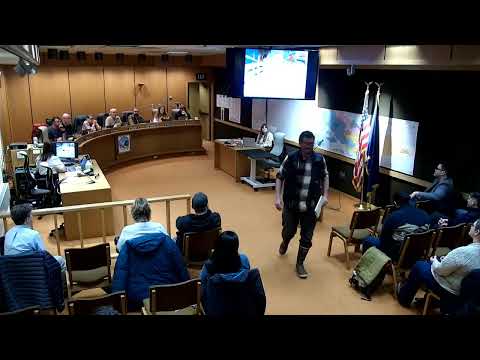
A design team working with DOT presented preliminary plans and a cost range for rehabilitating Ottomolo (Ameloy) Way during the Kodiak Island Borough work session on Jan. 29.
Will Webb, the consultant project manager, said the project covers the entire corridor from Manashka Bay to Rezanoff and the connection to the former North Star Elementary property. The design includes reconstructing the structural section beneath pavement, 10-foot travel lanes, 4-foot shoulders on both sides, a 5-foot asphalt sidewalk on the south side, rolled curb and gutter (2— to 4 inches rather than a 6-inch curb), ditching for drainage, and localized regrading where slopes and driveways require adjustments.
At a problematic S-curve near Peninsula Road the plan calls for realigning the corridor slightly south and raising the profile so drivers can see oncoming traffic; Webb said this change improves sight distance and clarifies the intersection approach. In areas with seeps and localized groundwater, the design team plans to use a porous rock backfill and deeper ditches to allow water to flow through and away from the pavement.
The project will require work outside the current right-of-way in places, which triggers a right-of-way process with affected property owners. Webb said environmental studies and documentation are on the critical path for the federally funded project; the team expects to reach federal obligation (authority to obligate funds and advertise for bid) in late 2027 and anticipates construction in 2028. Based on the preliminary design and utility coordination, Webb estimated construction costs in the $14 million to $16 million range.
Assembly members asked about resident feedback from a recent open house, detour planning and impacts on adjacent roads, how seep areas will be handled, and coordination with DOT on construction staging. Webb said staff heard support for sidewalks at the public meeting and that most driveway and utility impacts will be coordinated directly with affected property owners during right-of-way negotiations.
The assembly did not take a formal vote; staff said they will continue environmental analysis, refine utility agreements, and work on right-of-way coordination as the design advances.